
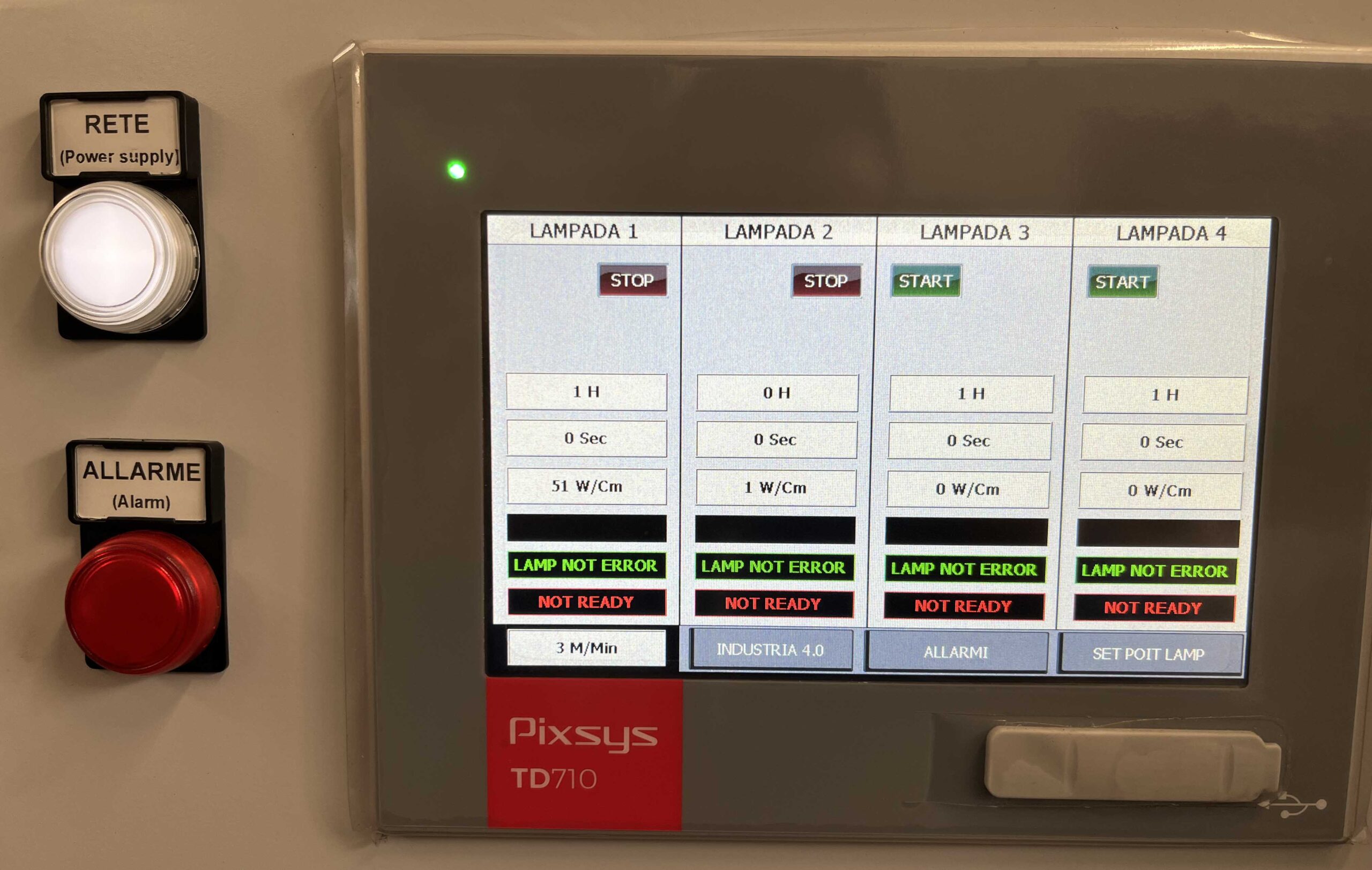
Upgrade your UV system. Keep what works.
We assess the lamps, power supplies, control cabinets, automation and air systems on your existing machine. We define what to retain, repair or replace according to the process, then test the work on the line. Two documented projects illustrate our scope.
Machine stopped or planning an upgrade?
For a current breakdown, you can call us. To assess an upgrade, start with photographs, nameplates and your objective; planned downtime, activities and cost are defined after the survey.
Three signs that call for diagnosis, not automatic replacement.
Is UV curing becoming inconsistent?
We compare the formulation, speed, lamp condition, reflectors, distance and exposure. The result on the product depends on the entire process and must be tested.
Are stoppages and alarms slowing down the line?
We examine sequences, power supply, enable signals, cooling and extraction before attributing the fault to a component.
Is the original part difficult to source?
We identify its function and interfaces. A repair or compatible replacement may solve the problem; if the limitation affects several assemblies, we assess a system revamp.
Müller Martini: seven lamp housings and seven power supplies.
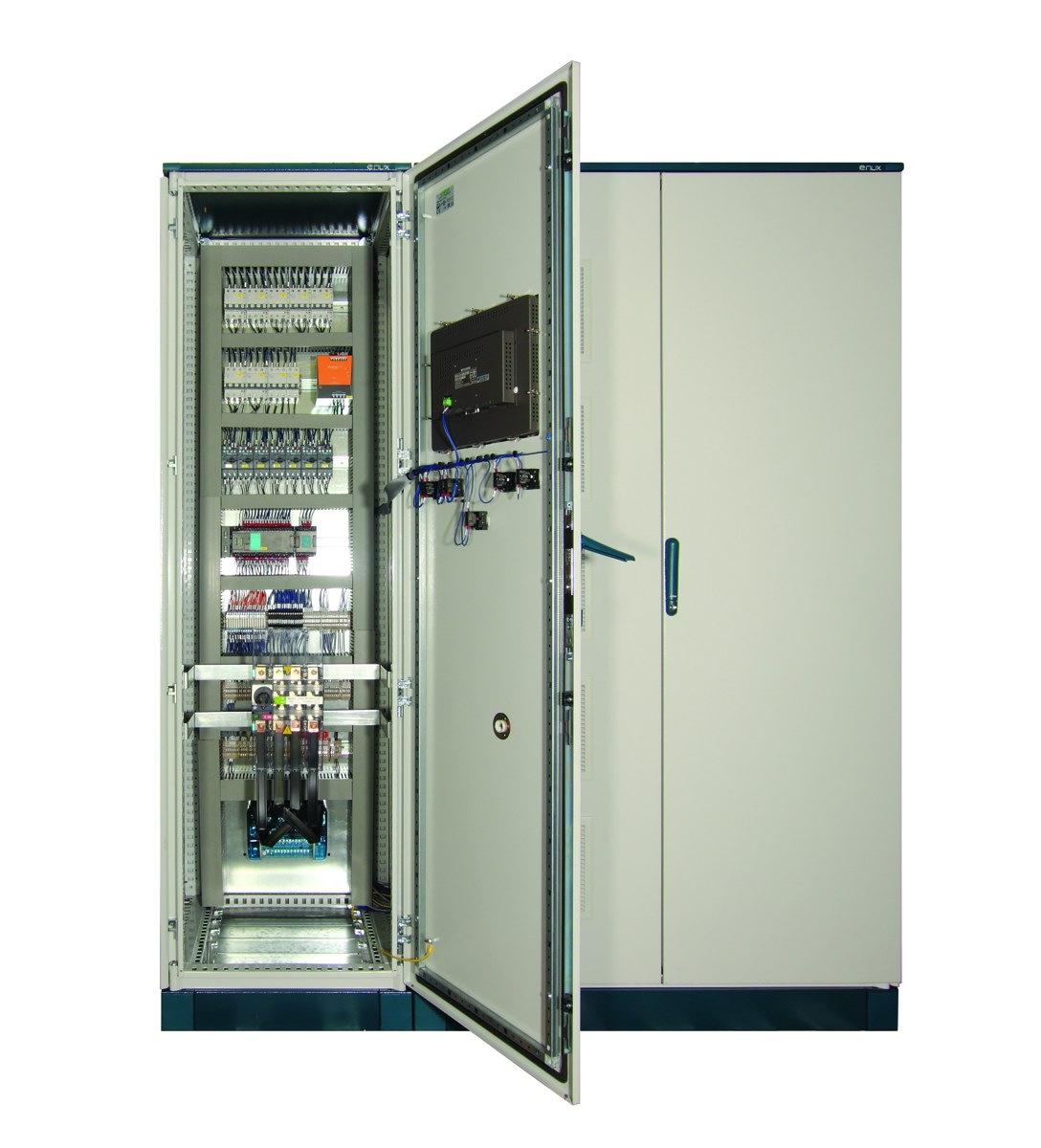
Two stages: refurbishment of the existing UV units followed by construction of seven new lamp housings, with a cabinet communicating with the machine and power adjusted to its speed.
Initial situation and assessment
The machine had seven lamp housings, each containing two lamps. The pneumatic shutters did not work, and the transformer cabinet did not communicate with the machine. We assessed the lamp housings, reflectors, power supplies and extraction; the system had been dismantled, so the printing process could not initially be checked.
Two stages of work
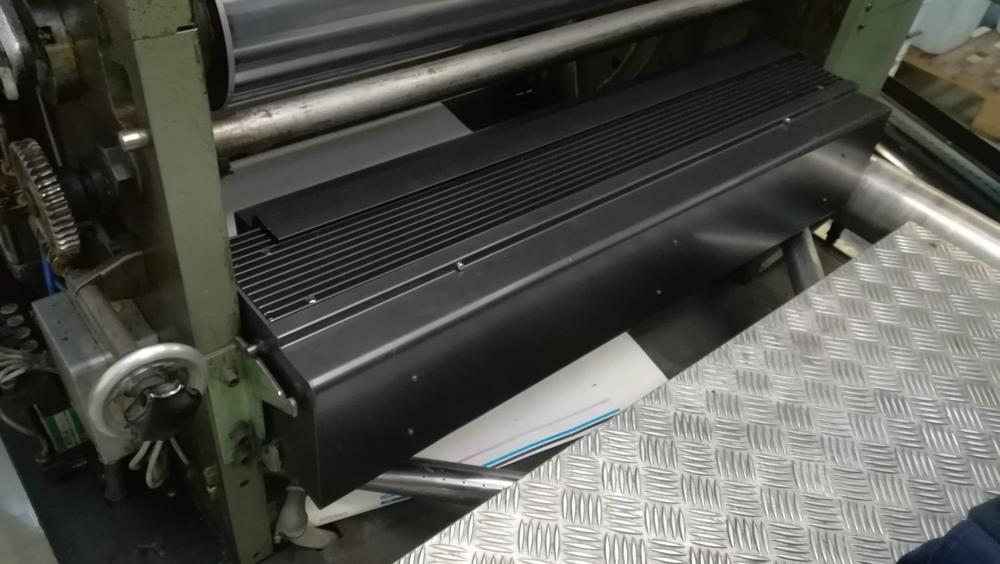
First, we refurbished the seven existing housings, redesigned and replaced the pneumatic shutters, and built a new cabinet communicating with the machine. We subsequently designed and built seven new lamp housings from scratch, each with a single lamp rated at approximately 160 W/cm, redesigning extraction and cooling. Power is adjusted according to printing speed.
Tests and production outcome
Electro Tecnology performed the functional tests, commissioning and acceptance testing. The customer's technicians carried out visual inspections, pull tests using their own equipment, and colour overlap analysis through the machine's vision system.
With certain paper and ink combinations, the machine was commonly operated at up to 250 m/min, its maximum speed. The previous limit of 160 m/min was reported by the operators, rather than measured by Electro before the work.
Responsibility: design, programming and acceptance testing were overseen by the Electro Tecnology owner; mechanical and electrical installation were carried out by two collaborators. The customer remains anonymous. The results concern the materials and operating conditions of this system.
What this case demonstrates
It documents the integration of UV assemblies, power supplies and controls into an existing machine, with photographs of the installed cabinet and lamp housing. The speed applies only to the application described.
For a new system: ink, substrate, exposure, speed and curing criteria must be recorded and tested. We do not present 250 m/min as a standard performance figure.
A question for your facility
Is your machine still productive, but its UV system is limiting the process? Photographs of the line, cabinet and lamp housings allow an initial assessment of the interfaces.
In Veneto, the structure was retained and the functional assemblies upgraded.
At a screen printing customer's facility, we retained the original machine structure, replaced the power, control and extraction systems, and refurbished the lamp housings.
Problem and assessment
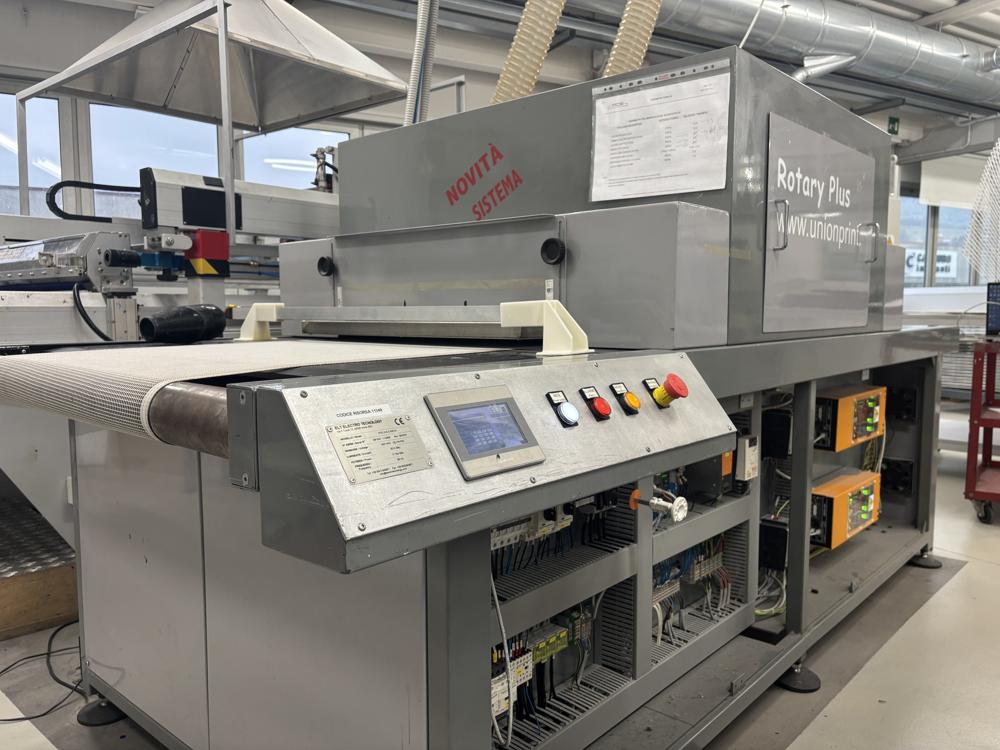
The UV system processed plastic films for touchscreens. It had problems with the lamp housings, transformer power supplies, controls and air handling, causing stoppages and rapid lamp deterioration. The customer wanted quality, increased production and stability. We assessed the entire machine, retaining its robust frame and structure.
Work performed
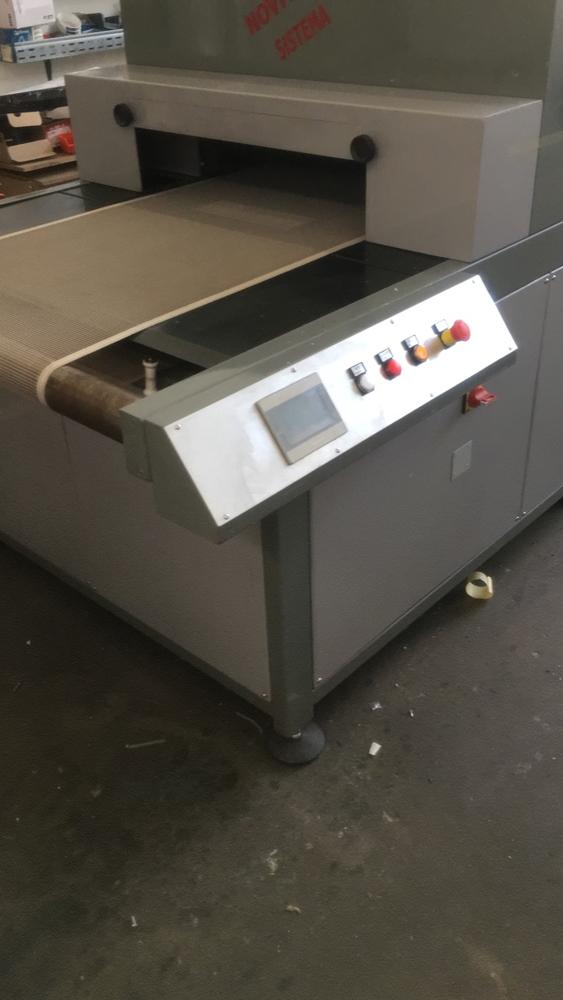
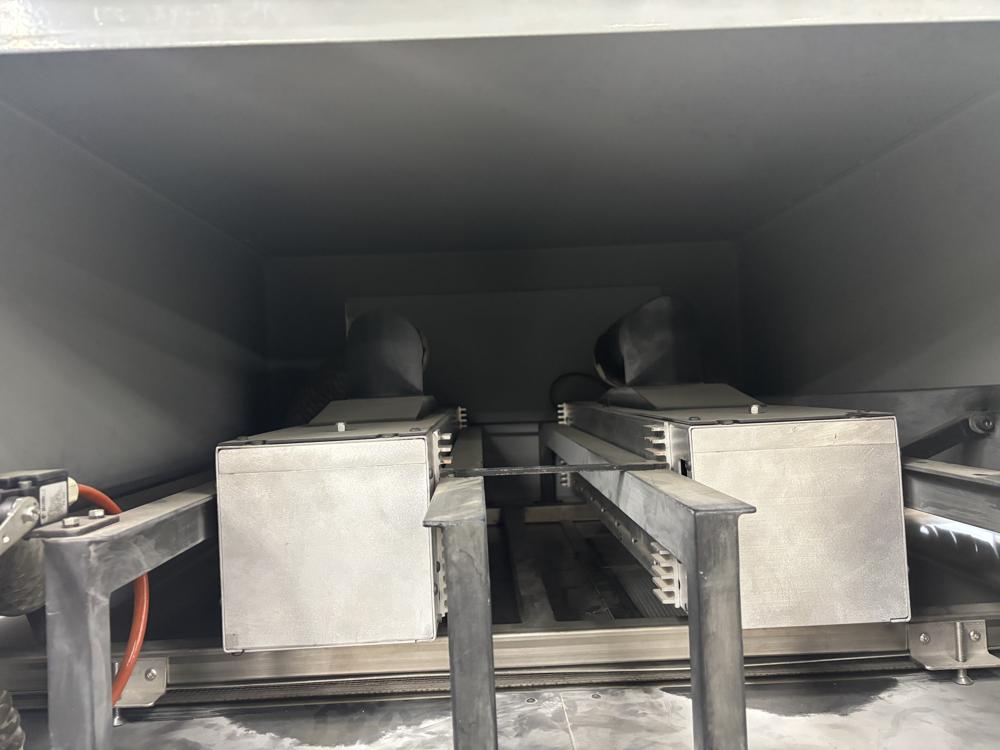
We redesigned and replaced the electrical system, cooling and extraction. A new vacuum conveyor bed keeps even small formats against the belt; previously, they lifted inside the lamp compartment. The lamp housings retain their outer shells, with new reflector profiles, shutters and internal airflows. The transformers were replaced by electronic ballasts with 96% efficiency as stated by the component manufacturer.
Tests and findings
Electro's technical contact and the production manager carried out visual inspections, pull tests and rub tests. After the work, the customer could process all their formats, with improved curing and stability.
Before-and-after electrical measurements on the UV system alone, with the machine separated from the rest of the line, indicated approximately 35% lower power draw, according to the recollection of the technician who handled the work; the absolute readings are not currently available.
The customer reported approximately 30% initial waste and, after about one year, 7–8% total waste, which was not due to insufficient curing. These are customer figures: the overall change is not automatically attributed solely to the UV system.
Responsibility: design, programming and acceptance testing were overseen by the Electro Tecnology owner; mechanical and electrical installation were carried out by two collaborators. The customer remains anonymous. The results concern the materials and operating conditions of this system.
Working with an existing machine
The project shows how to separate a usable structure from assemblies that need upgrading. No dose or speed values are published here: these must be defined for the customer's product and configuration.
The photographs show the system and internal assemblies after the modifications; the customer's identity remains confidential.
The decision starts with a functional inventory.
We assess the machine and UV subsystem together. Usable mechanical parts can remain; components that limit safety, maintenance or the process are included in the proposed work.
| Assembly | Checks on the existing system | Possible work |
|---|---|---|
| Lamp housings and optics | Geometry, reflectors, shielding, opening, access and irradiated area. | Refurbishment, housing replacement or repositioning according to the process. |
| Power supply | Source type, power, wiring, electrical compatibility and adjustment. | Repair or a new power supply/cabinet with appropriate enable signals and protection. |
| Air and thermal management | Airflows, workpiece temperatures, extraction and ozone management where applicable. | Refurbishment of ventilation, ductwork or extraction and the associated diagnostics. |
| Conveying and automation | Speed, interfaces, machine controller (PLC), operator panel (HMI), alarms, interlocks and available machine space. | Integration of the new assemblies while retaining technically suitable parts. |
The table lists checks and possibilities, not components replaced in every project. The configuration is defined after the survey.
UV compatibility is checked on the product and the machine.
UV discharge lamps and formulation
For existing lamps, we record type, spectrum, power, effective length, power supply and optical condition. Any change of source requires checks on the formulation and curing result, including through-cure where relevant.
Conversion to UV LED
This is considered only if the ink, coating, resin or adhesive is compatible with the available wavelength and dose. Distance, coverage, cooling, interfaces and speed must be checked: an LED is not a direct replacement for every discharge lamp.
From survey to testing, with a clear scope of supply.
We document the machine, lamps, cabinet, airflows, access constraints, product and symptoms.
We identify assemblies to retain, repair or replace and risks at the interfaces.
We provide the scope, components, responsibilities, required tests, schedule and cost.
We design the mechanics, power supply, enable signals, control and air system to suit the machine.
We check sequences, protection, thermal behaviour and treatment on the agreed product.
We define the documentation for the work and useful maintenance guidance.
Replacement, repair or revamp: we decide after diagnosis.
Service and spare parts
Component identification, repair or replacement after checking function and compatibility. Explore our UV spare parts service.
Targeted retrofit
Lamp housings, power supplies, air and control are assessed together; the rest of the machine can remain where suitable.
System revamp
When the formulation, speed or use changes, we redefine the UV subsystem, interfaces and process testing.
What to send for a useful assessment.
Machine and fault
- Make, model, year if available, overall photographs and nameplates.
- Photographs of lamp housings, power supplies, cabinet and extraction.
- Alarms, the conditions in which they occur, work already carried out and available drawings.
Process and objective
- Product and formulation, technical data sheet if available, substrate and treatment area.
- Current and target speed, permissible temperature, expected quality and acceptance criteria.
- Stoppages, space constraints, utilities and line interfaces.
Answers for production, engineering and purchasing.
Do I have to replace the entire machine?
No, provided the retained parts are technically suitable and compatible with the work. Diagnosis distinguishes the structure, conveying system and UV assemblies that need upgrading.
Can UV LED always replace a discharge lamp?
No. It requires a compatible formulation, coverage of the treatment area, sufficient exposure, cooling, and electrical and control integration. Testing on the product guides the decision.
How long will production stop?
This depends on the survey, fabrication, machine access, wiring and testing. We define the stages and planned downtime in the proposal after inspecting the system.
How is the result validated?
Measurements and criteria are agreed for the actual product: machine sequences, enable signals and alarms; thermal behaviour and treatment results. Data from another project do not replace this testing.
Do you provide documentation and support?
Documentation for the work and maintenance guidance are defined in the proposal; support and spare parts availability depend on the installed components and agreed scope.
Tell us what is limiting your UV system today.
Send photographs, nameplates, a description of the problem and the required result. We can start with the available information and identify the checks needed.
Electro Tecnology SRLS · Imola