
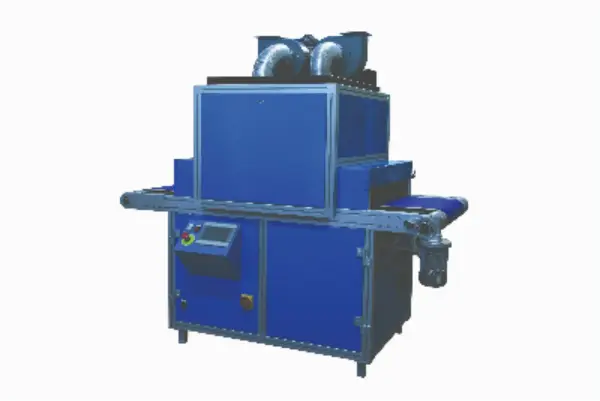
Industrial UV Lamp Housings
A lamp housing is more than an enclosure: geometry, the reflector, cooling, distance and movement determine how UV energy actually reaches the product.
Tell us about your projectWe design around the point where the energy needs to reach.
From linear housings to rotary systems and special geometries, every solution starts with the process and the machine's actual space constraints.
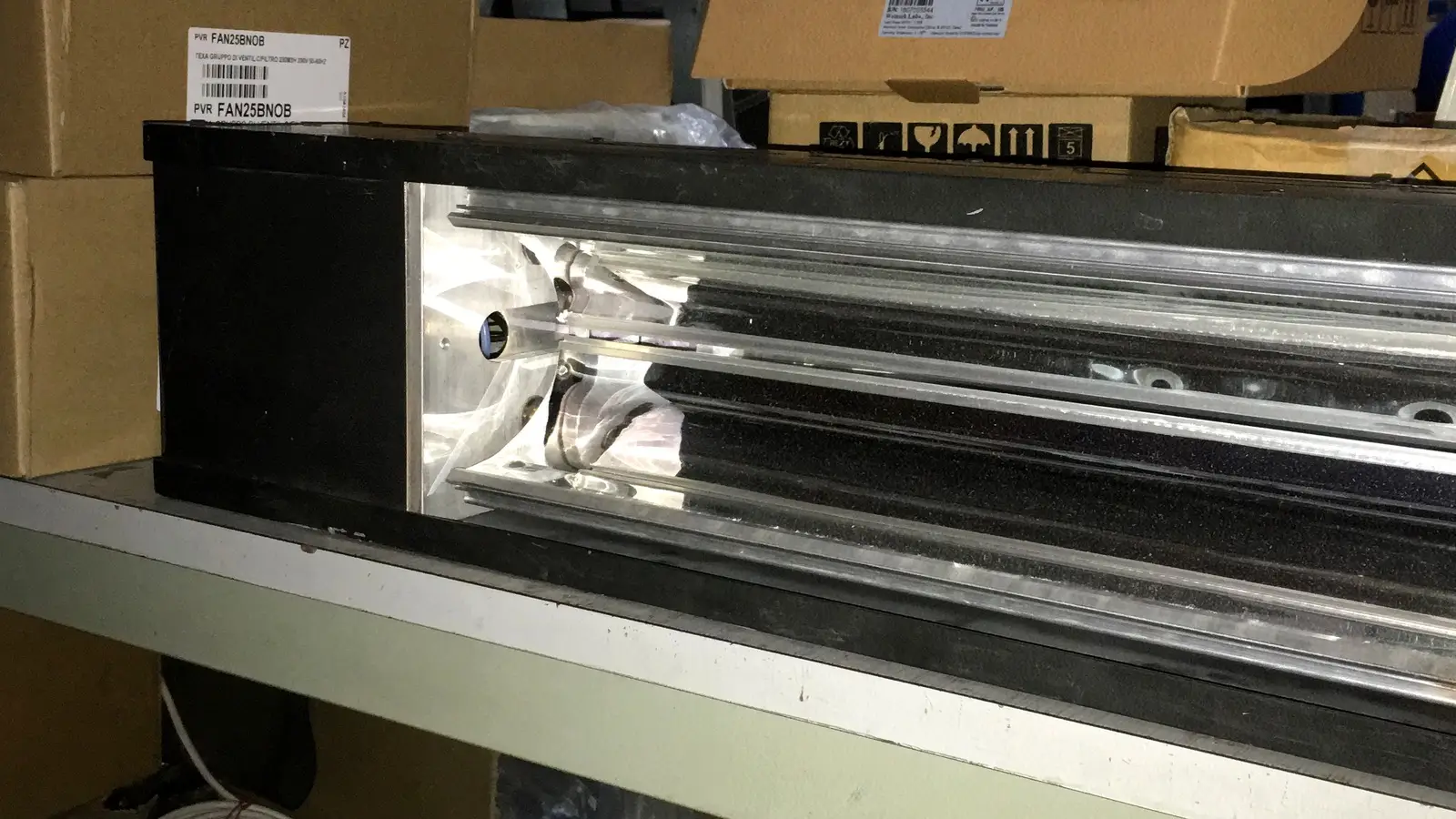
A solution built around the process.
Reflectors and geometries
The reflector shape and lamp position are assessed according to the irradiation required.
Cooling
Air and temperature management for stability, service life and safety.
Adjustments and rotary systems
Special solutions with movement mechanisms, adjustments and twin lamp housings where the process requires them.
Understand first. Then design.
Survey
Space, distance and product.
Design
Geometry and power.
Manufacture
Materials, reflectors and cooling.
Refurbishment
Maintenance and recovery of the existing housing.
Technology visible in the details.
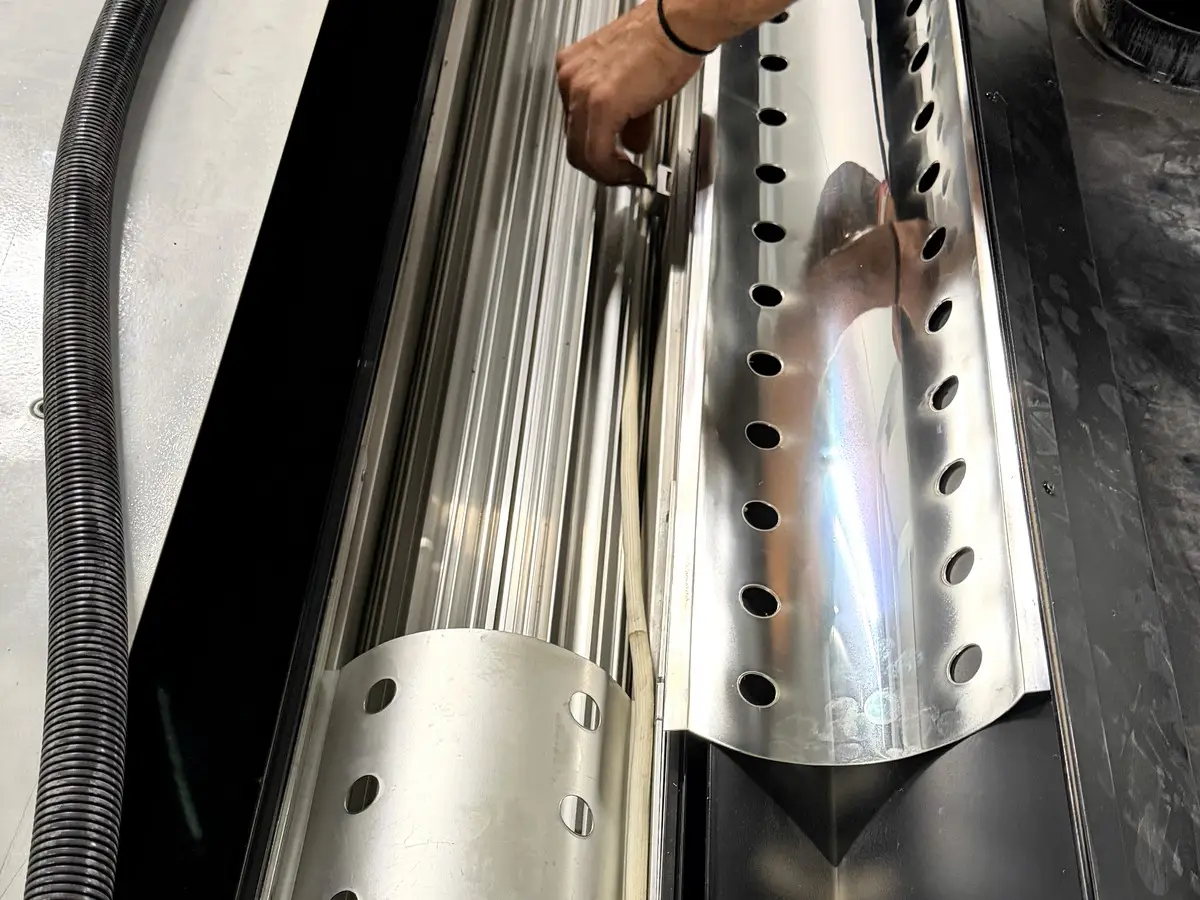
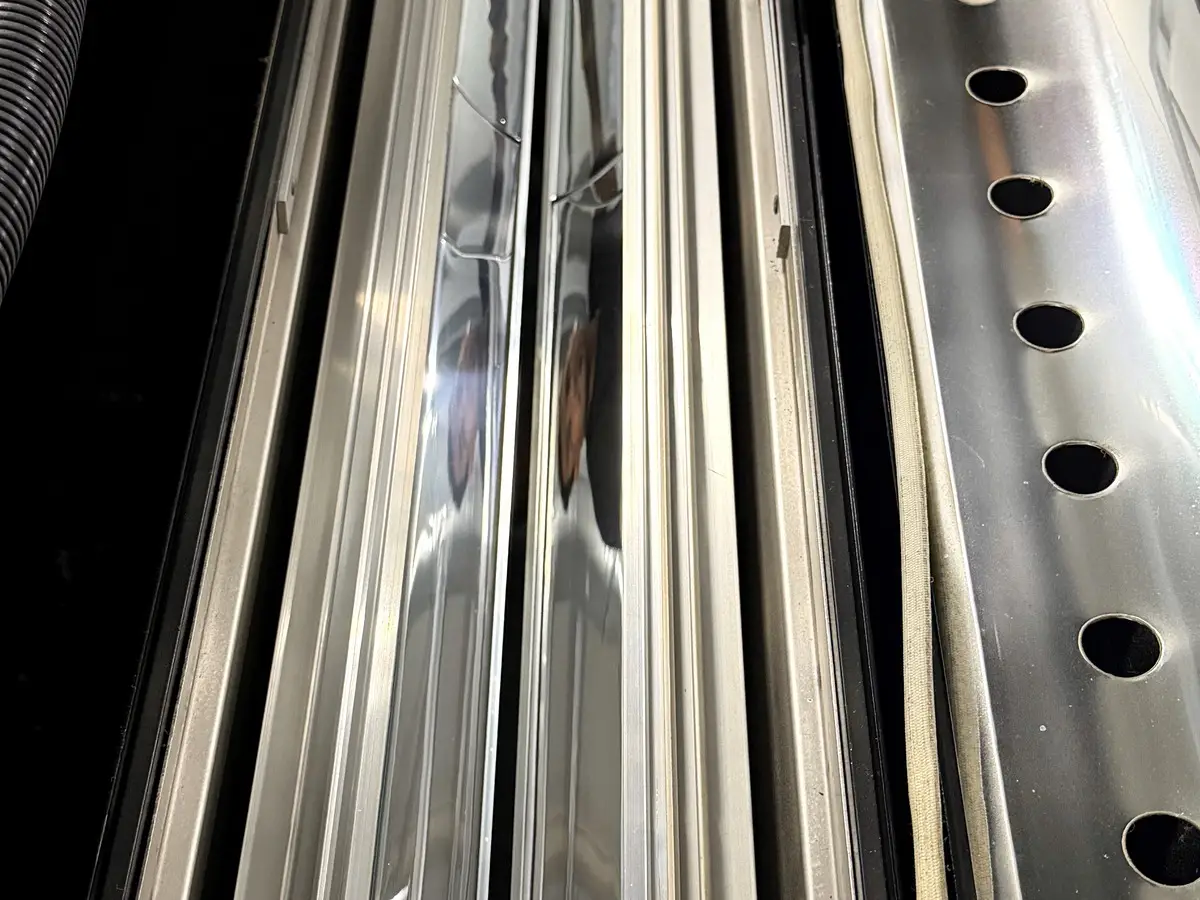
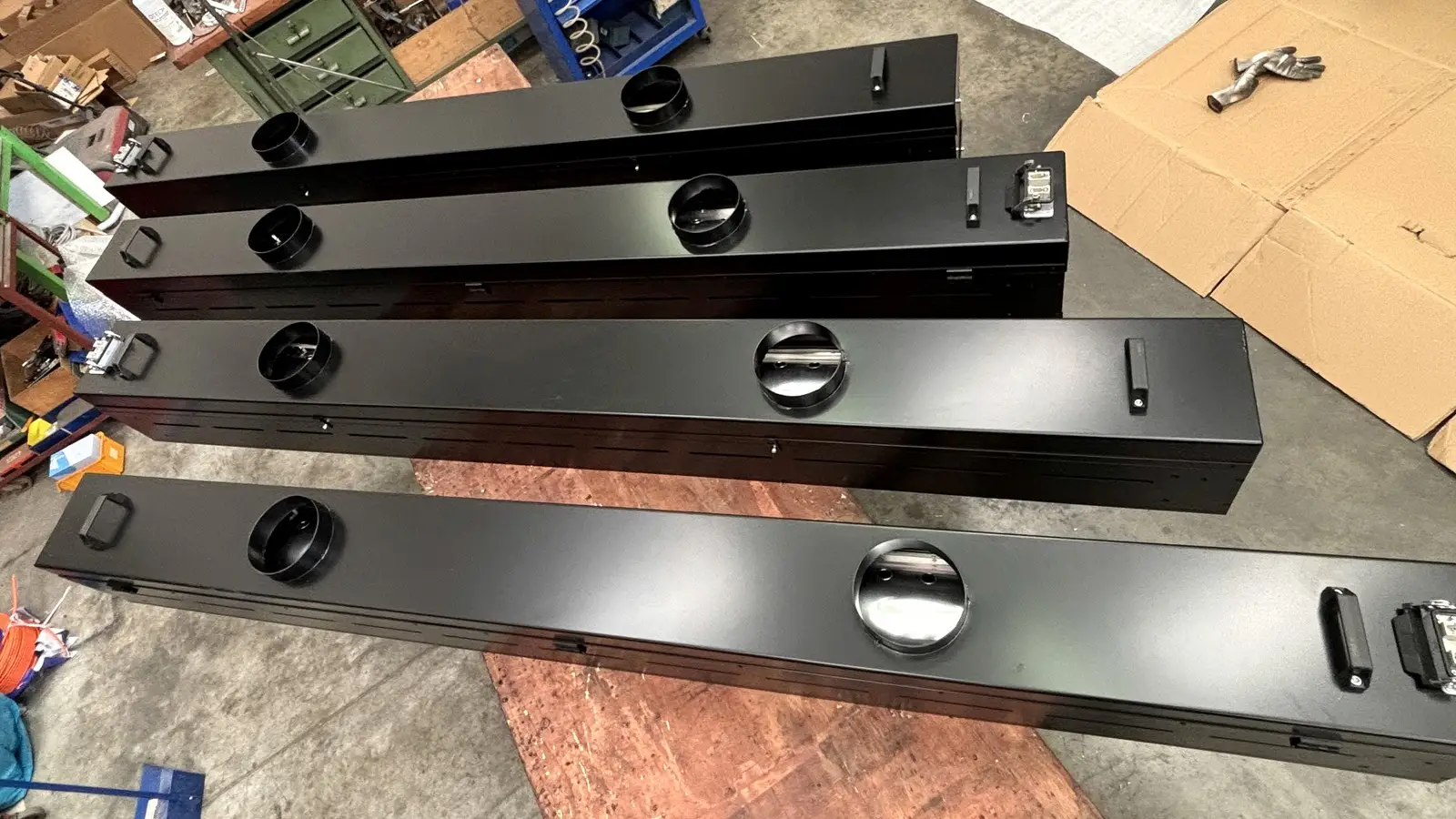
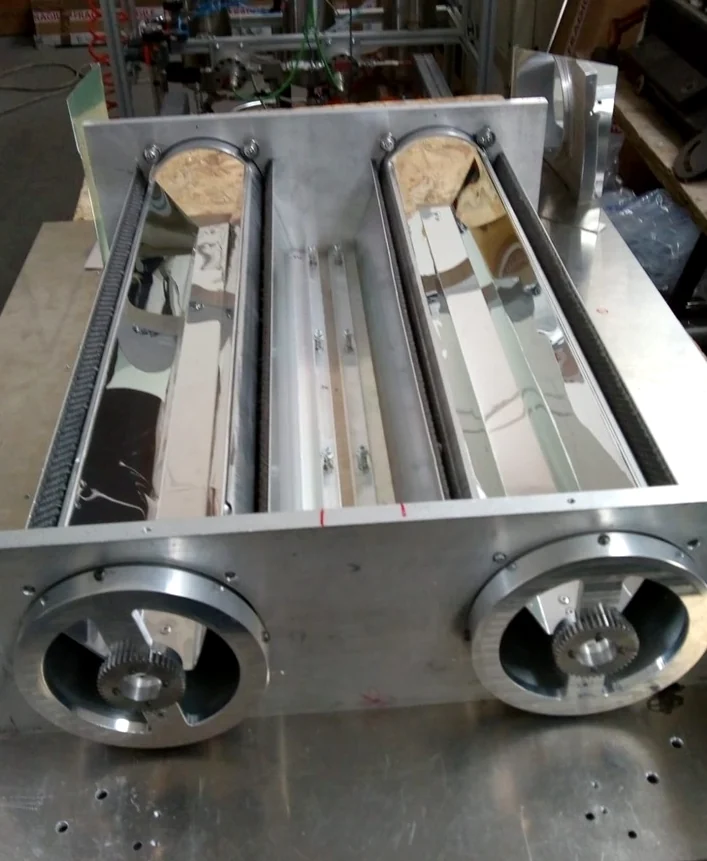
When the lamp housing needs to move with the process.
Rotary systems and mechanically adjustable configurations are a practical example of our approach: rather than starting with a standard shape, we develop geometry and movement around the machine and product.
Shutters: two movement solutions.
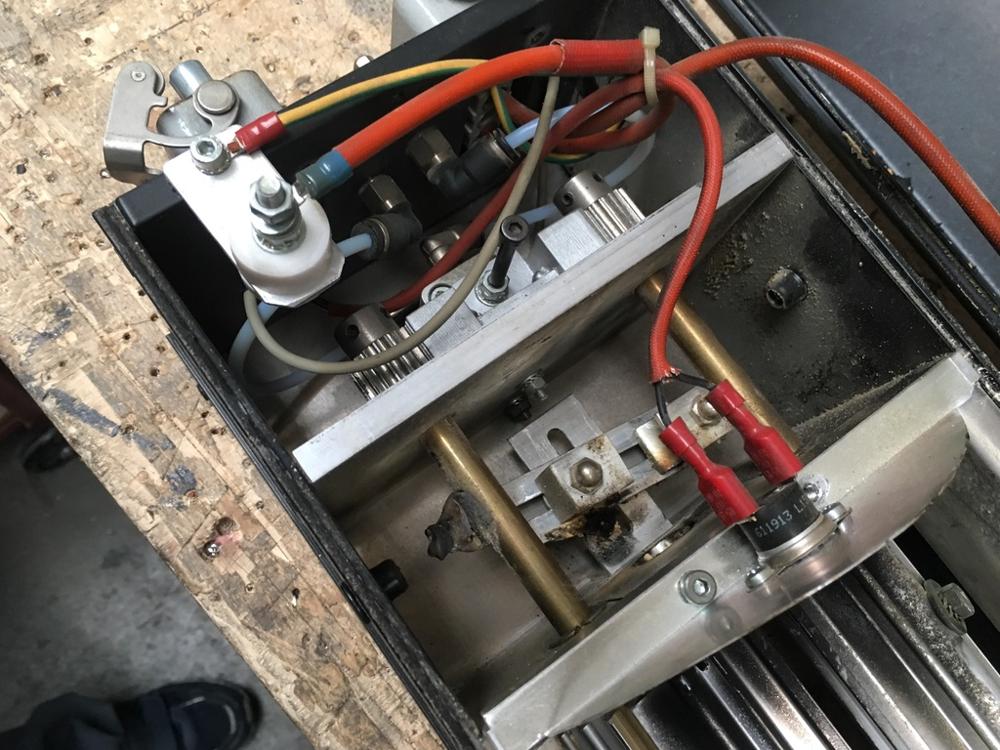
Pneumatic guillotine shutter
The detail shows the pneumatic movement of the guillotine shutter integrated into the lamp assembly.
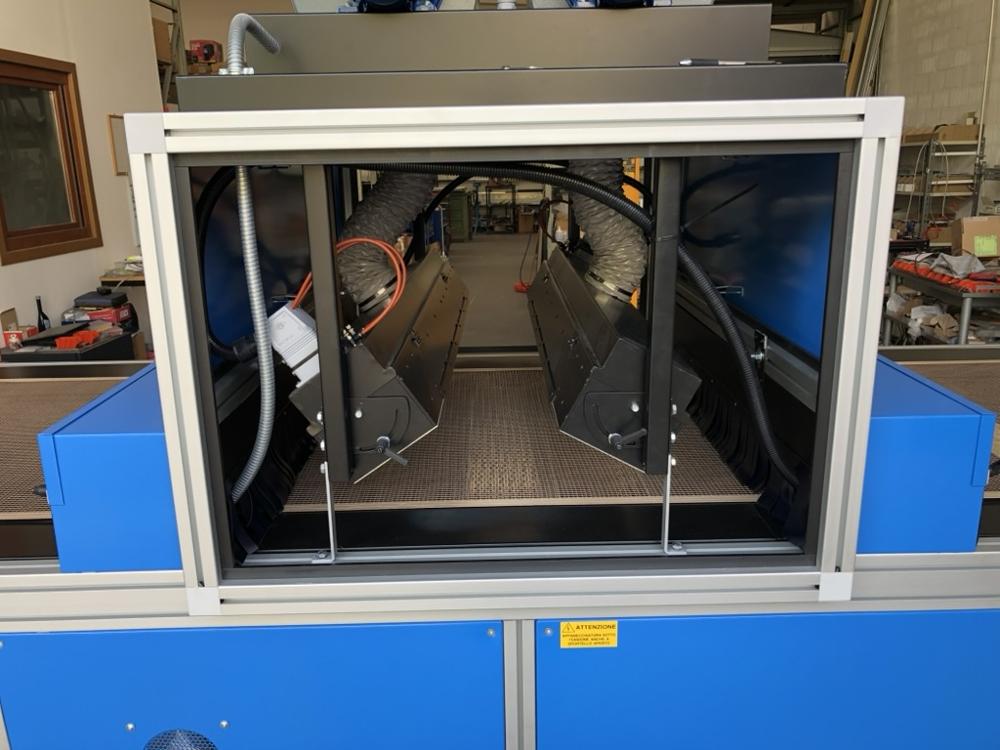
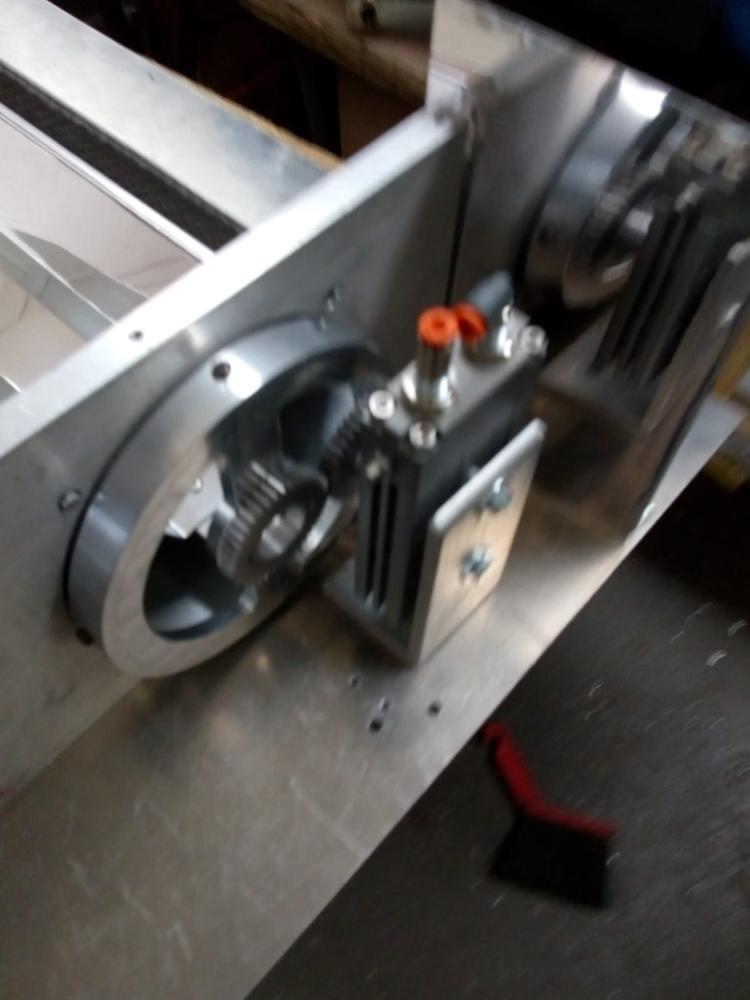
Rotary shutter
The view inside the machine and the mechanism detail show both the installation and the movement of the rotary shutter.
A lamp housing is part of the process, not simply a container.
Reflector geometry, distance from the product, working width, ventilation, accessibility and shielding directly affect energy distribution, temperature and maintenance.
Geometry and uniformity
We design or adapt the assembly according to the surface to be irradiated, working distance, transport direction and the required uniformity across the working width.
Cooling and extraction
Airflow, heat extraction and ozone management where applicable need to be assessed together with source power and available space.
Maintenance
Lamp replacement, reflector cleaning, component access and adjustments should be possible without turning every intervention into machine disassembly.
Useful information: working width, available dimensions, distance from the product, line speed, required power, extraction position and photographs of the installation area.
Refurbish the existing housing or develop a new geometry?
The choice depends on what has changed in production. If the product, space constraints and configuration remain the same, the first question concerns the condition of the existing assembly. If the part shape, treatment area or arrangement on the line changes, the geometry also needs to be reassessed.
- For refurbishment, describe the fault and specify whether it developed gradually or followed a particular event.
- For an adaptation, show the product path and the obstacles around the treatment area.
- In both cases, document how the assembly is accessed for maintenance.
A photograph of the lamp housing alone may not show the machine's constraints. Add an overall view: this helps relate the component to the installation. For faults and spare-part identification, see our UV service page.
Do you have a lamp housing to refurbish or a non-standard geometry?
We start from your production process, materials and the result you want to achieve. The solution comes afterwards.