
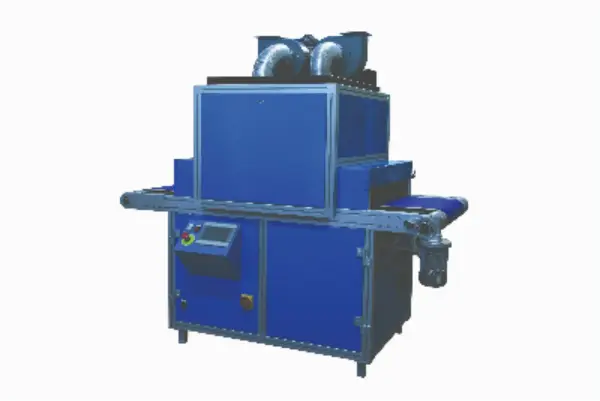
Screen Printing, Flexography and Offset
Screen printing, flexography and offset have different UV curing requirements. Assessing an intervention requires information on the ink or coating, substrate, deposited layer, speed and available space. Feasibility and the scope of supply need to be defined for the specific machine.
Let us assess your machineIn printing, lamp power alone is not enough.
For screen printing, flexography and offset, we analyse the ink or coating deposit, substrate, machine speed, working width, distance from the source, available curing time and thermal management. Any pinning or pre-curing requirements need to be specified in the enquiry and assessed technically.
Irradiance and dose
Installed power alone does not describe what the product receives. Speed, distance, optics and exposure time determine the energy actually delivered to the substrate.
Distance and working area
For retrofits and OEM integrations, we check available space, the substrate path, shielding, cooling and access for maintenance and lamp replacement.
Sequences and interlocks
Machine permissive signals, speed, ignition, standby, alarms, extraction and safety functions need to be integrated into the line logic, with diagnostics accessible to the operator.
For an initial technical assessment: printing process, chemistry used, substrate, width and speed, existing UV system, power, available space and photographs of the integration area.
Curing begins with understanding the process.
A retrofit or new integration cannot be decided by looking only at nominal power. Information is needed on the chemistry used, deposited layer thickness, speed, working width, available distance and the thermal conditions acceptable to the substrate.
This is why screen printing, flexography and offset are considered separately: they share UV technology, but not the same production dynamics.
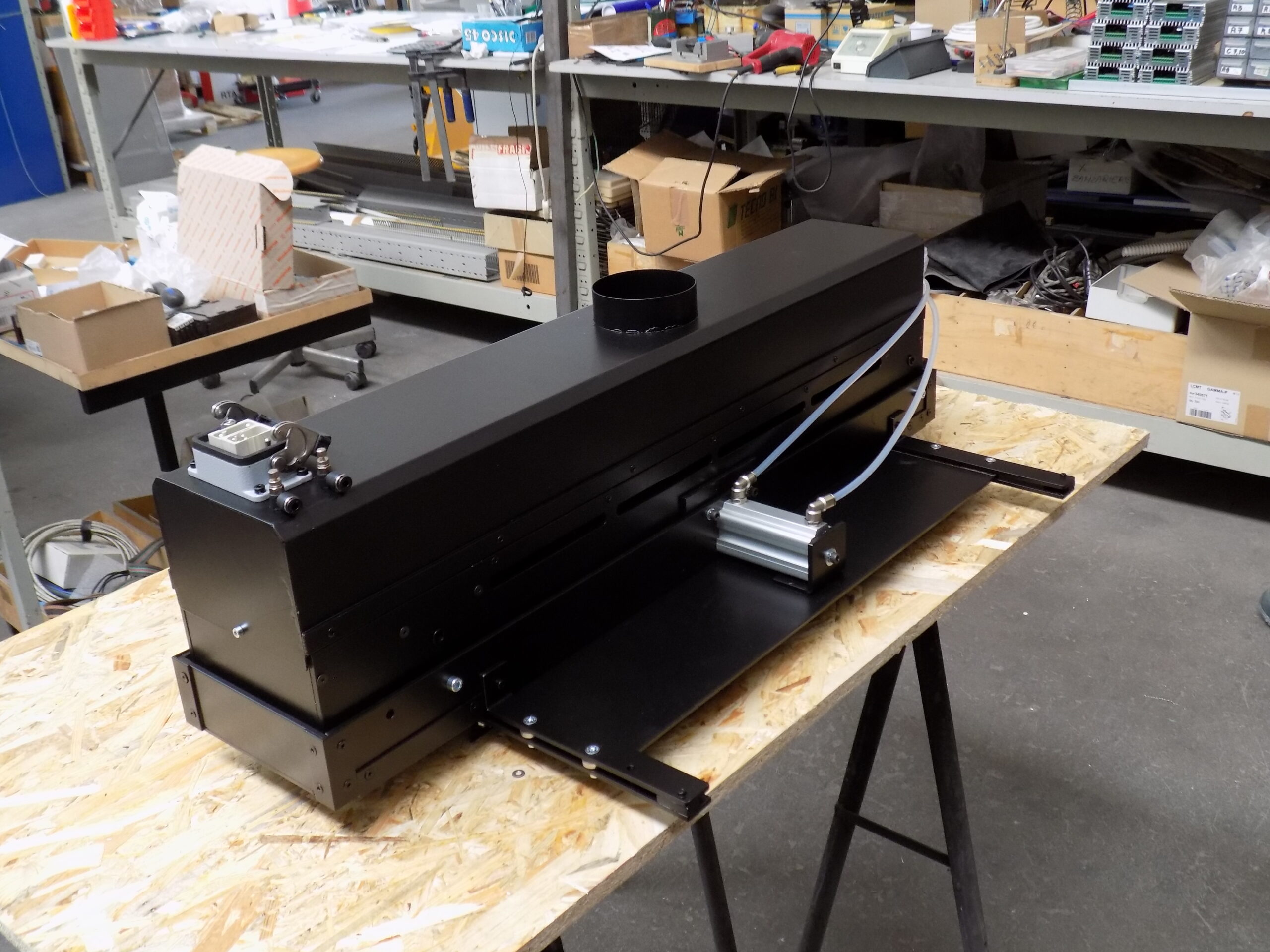
The solution changes with the machine.
Deposit, geometry, distance
We assess deposit thickness, substrate, available curing time, distance and irradiation geometry. On existing machines, the system may need mechanical adaptation to the actual part path.
Speed and inline integration
The configuration depends on width, speed, source positions and intermediate or final curing requirements. The control system needs to communicate with the machine and respond correctly to acceleration, stops and production.
Compatible chemistry and machine space
Conventional UV and UV LED are not automatically interchangeable. Inks or coatings, geometry, overall dimensions, thermal management and the feasibility of integration or retrofit require a specific assessment.
From the deposited layer to commissioning.
Chemistry
Ink or coating and spectral compatibility.
Deposit
Thickness and the surface result required.
Speed
The actual time available for curing.
Geometry
Width, distance, position and overall dimensions.
Control
Power, interlocks, diagnostics and machine integration.
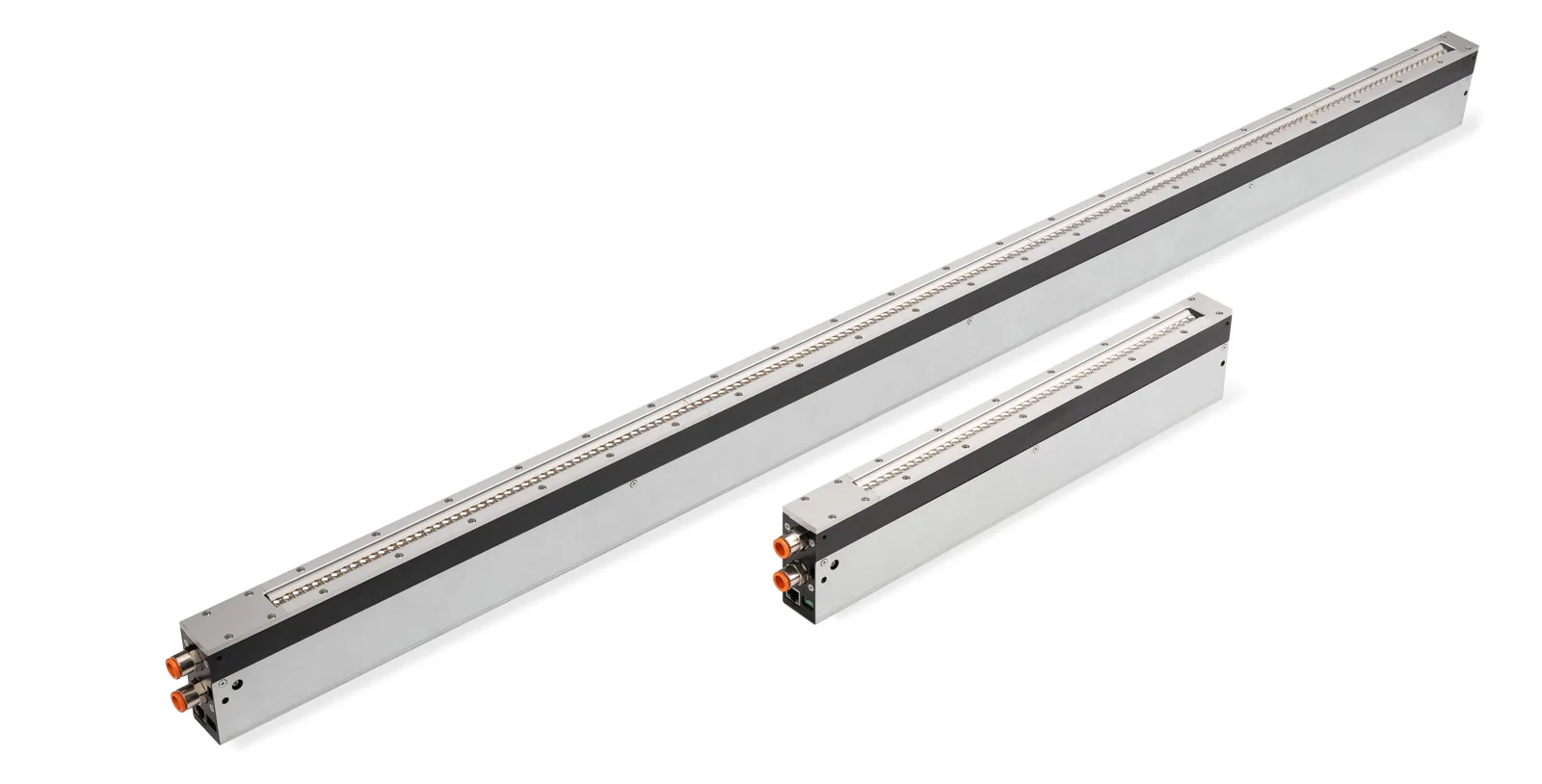
When the machine is not standard, the system cannot be either.
One of the early experiences that led to the creation of Electro Tecnology was a system installed on a screen-printing machine in Serbia, with an unusual part-path geometry and mechanical adjustment of the source height. It illustrates the approach we still use today: first observe the machine, then build the system around its constraints.
What we need before proposing a solution.
Machine and process
Printing technology, model or layout, working width, speed and available space.
Product
Substrate, ink or coating, deposit, required result and thermal limits.
Existing system
Lamp or LED type, power, power supply, cooling, photographs and the problem to solve.
Curing tests for glass bottles.
Testing on bottles makes it possible to assess UV treatment on the actual product, taking account of part geometry and the printed deposit.
Comparing formulation, exposure and processing conditions helps define the solution for the specific screen-printing application.
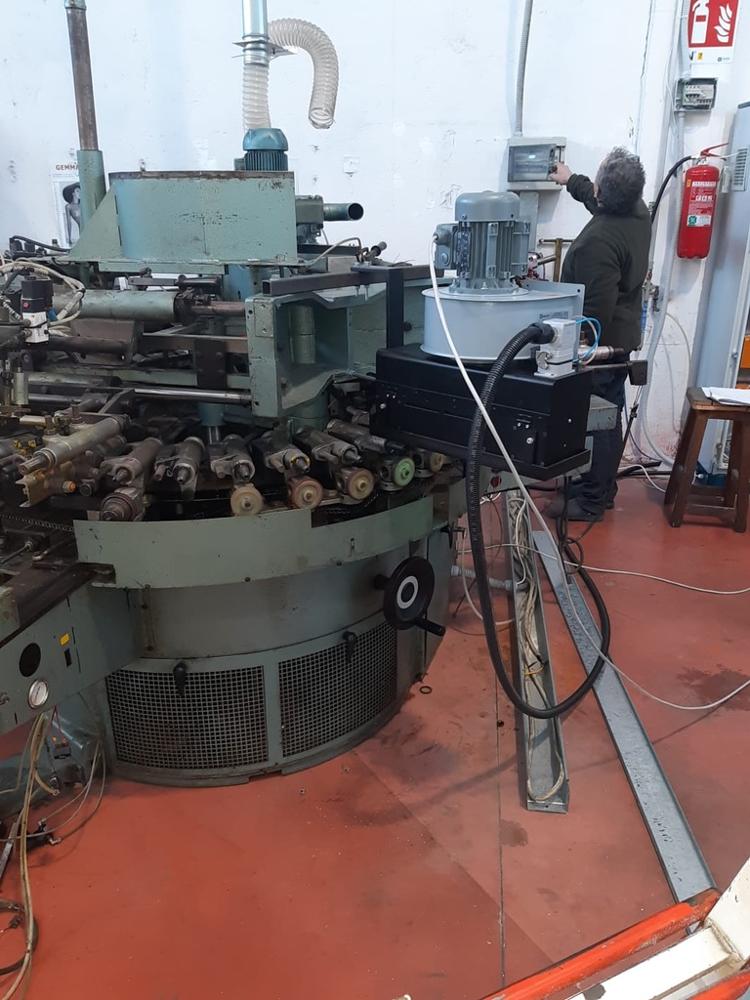
An installation built around the product.
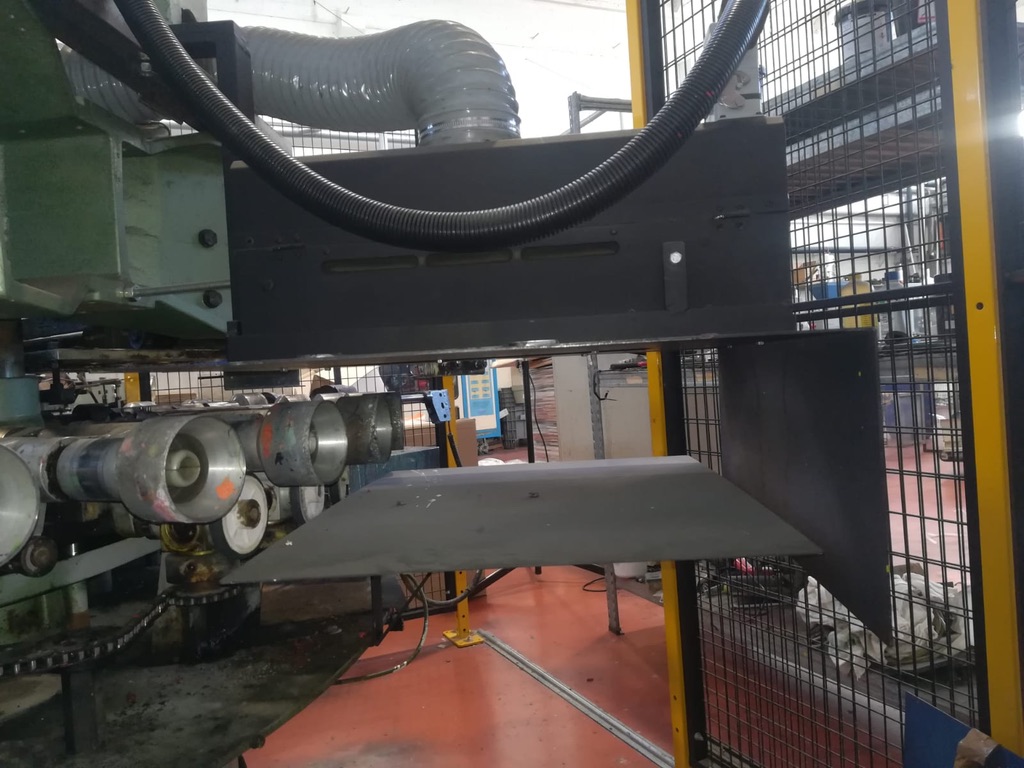
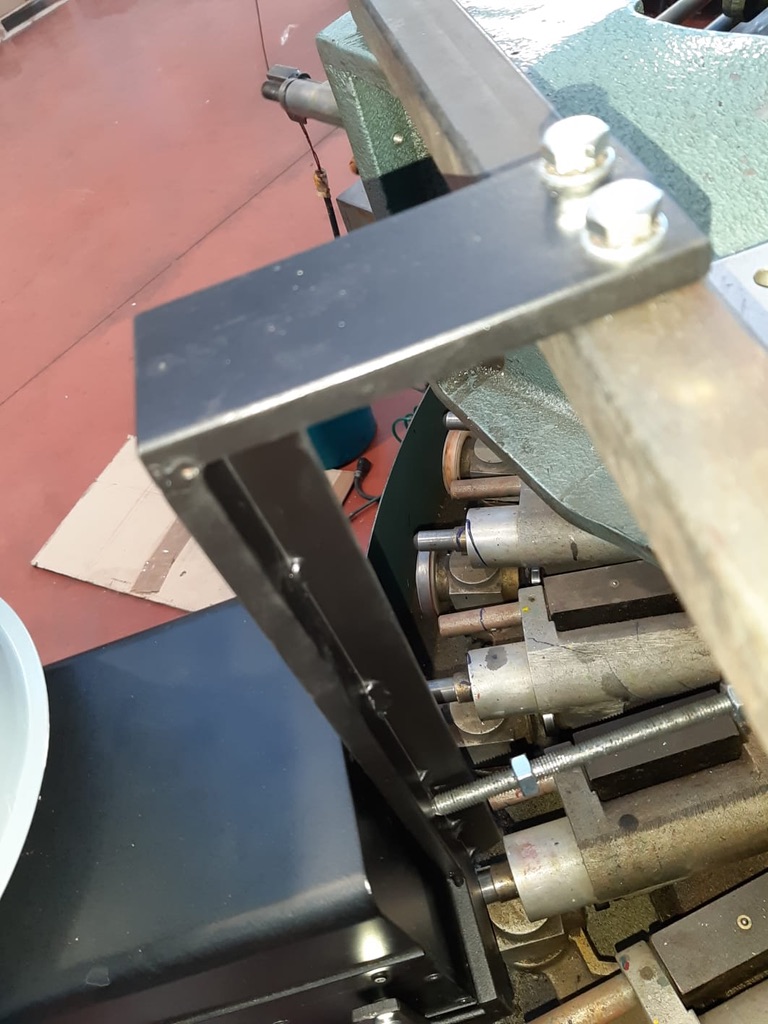
We progressed from curing tests on glass bottles to installations on the machine. To maintain the lamp in the optimum position, we designed and manufactured a dedicated support arm, shown in the final photograph.
Parameters to check on the machine.
Dose, irradiance, spectrum, distance and exposure time are useful parameters for analysing curing. The checks required and the feasibility of the intervention need to be defined for the specific machine and product.
Screen printing on components: UV and extraction in the same system.
The photographic archive includes a three-lamp installation intended for a system for screen printing on sheathed heating elements. The project included automatic management of both supply and exhaust air: the UV system was therefore part of an assembly that also included air handling.
For this screen-printing application, air management is part of integrating the UV assembly. The machine, product, formulation and operating conditions remain the reference points for assessing each new enquiry.
If you are upgrading a line, also specify how supply and exhaust air are managed and which controls are already available. Read more about interventions on existing equipment on the UV retrofit and revamping page.
Are you considering a new system or a retrofit?
Send us photographs, machine data and information about the process. That is where we start.