Industrial Automation
From early electromechanical equipment to modern systems with PLCs, HMIs and industrial protocols: for us, automation starts with the process, not the software.
Tell us about your projectBetter control starts with a better understanding of the machine.
We have experienced the transition from relays to controllers, micro-PLCs and complete electronic control systems first-hand. Today, we integrate automation and process with the same principle: use technology only where it brings a real benefit.
A solution built around the process.
PLCs and I/O
Machine logic, sequences, interlocks, diagnostics and safety functions.
HMIs and recipes
Intuitive control, parameters, alarms, recipes and useful information for the operator.
Industrial protocols
Modbus, EtherCAT, CAN bus and integration with existing systems.
Understand first. Then design.
Process
First, we understand what the machine needs to do.
Architecture
We define signals, drives and communications.
Software
We program control logic and interfaces.
On site
We test on the actual process.
Technology visible in the details.
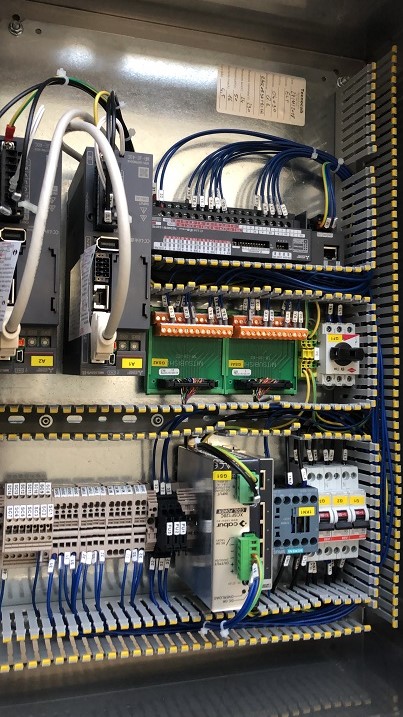
Control upgrade
Detail of the Mitsubishi drive control cabinet upgraded at a customer's premises.
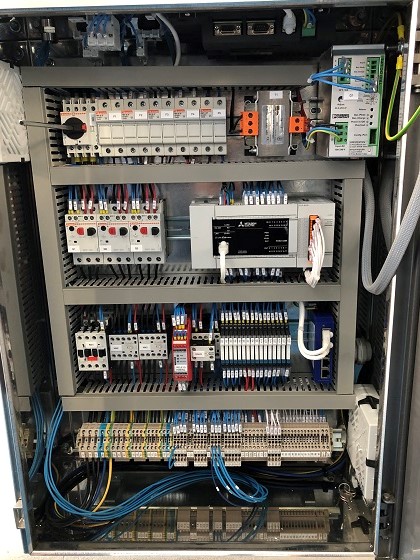
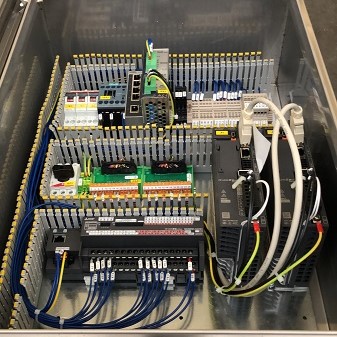
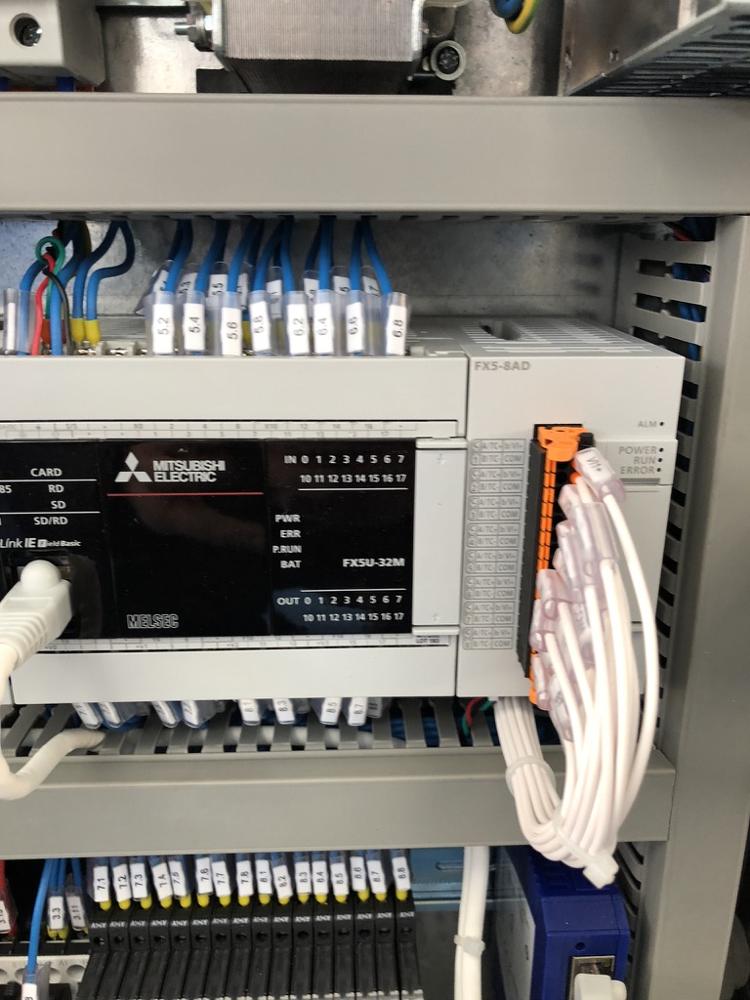
Components and control
Technical detail of the machine's automation.
Automation designed around the machine, not added afterwards.
Before choosing PLCs, HMIs or drives, we analyse sequences, I/O, interlocks, permissive signals, safety functions, cycle times and available signals. The aim is to build control logic that is readable, diagnosable and consistent with the actual process.
PLCs and I/O
Management of digital and analogue inputs and outputs, sequences, timing, recipes, alarms, permissive signals and diagnostics. When working on existing equipment, we also assess compatibility and migration from obsolete components.
HMIs and diagnostics
Operator interfaces for setpoints, recipes, machine status, alarms and maintenance. An effective HMI should help the operator understand what is happening, not simply display buttons.
Communications
Integration with variable-frequency drives, I/O modules, power supplies and peripheral devices using industrial protocols such as Modbus, EtherCAT or CAN, where required by the machine architecture.
Preparing a control-system migration
When upgrading a machine's control system, it is useful to distinguish the functions to retain from the changes required. A list of day-to-day problems is more helpful than a generic request to replace the PLC: which alarms are unclear, which adjustments require manual intervention, and which sequences must remain unchanged?
- Gather copies of the current programs, recipes and settings, where available.
- Specify the conditions that cause a stop and how the machine is currently restarted.
- Describe the differences between production jobs and the information useful for maintenance.
The availability of documentation affects the reconstruction work: not every migration is a direct software transfer. For an intervention also involving the power supply and UV assembly, the assessment should be linked to retrofitting the entire subsystem.
Useful information for an assessment: available electrical diagrams, I/O list, PLC/HMI make and model, installed drives, machine cycle description, current faults and revamping objectives.
Automation: what we assess before intervening.
Can a PLC be replaced while retaining the machine?
Yes, where the existing logic and hardware can be reconstructed or migrated without compromising sequences, safety functions and communications. Before the intervention, we analyse I/O, drives, HMI and dependencies on other subsystems.
Can a new HMI be integrated into an existing system?
Often, yes. The PLC, communication protocol, available variables and interface objectives need to be checked: adjustments, recipes, diagnostics, alarms and maintenance.
Which industrial protocols do you work with?
Integration may involve Modbus, EtherCAT, CAN and other protocols compatible with the installed equipment. The choice depends on the machine and the devices to be connected.
What makes machine diagnostics useful?
Indicating that an alarm exists is not enough: the operator should be able to identify the cause, the missing permissive signal or the component involved. This is why we design HMIs and control logic with maintenance in mind as well.
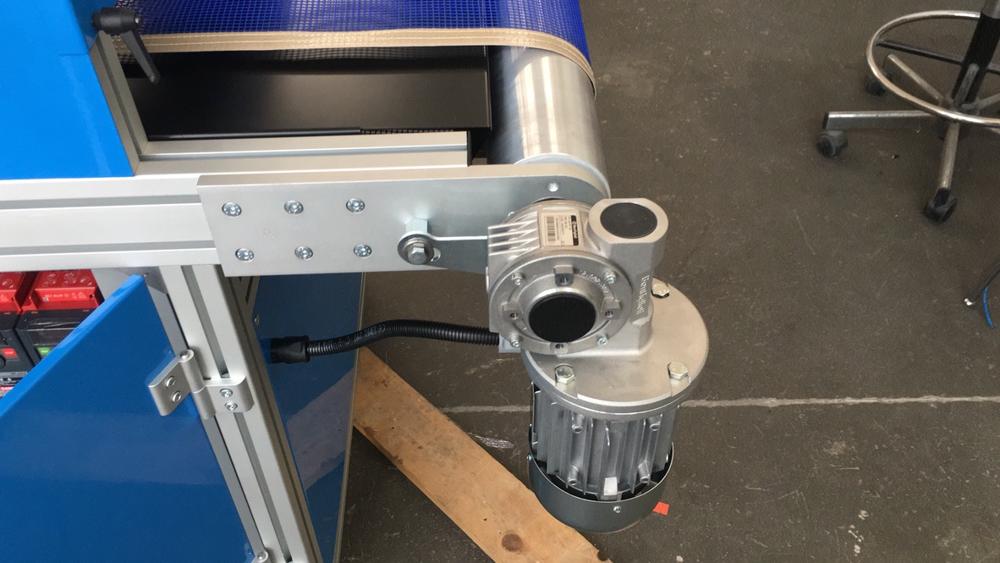
From control signals to machine movement
Tell us about the process you want to improve.
We start from your production process, materials and the result you want to achieve. The solution comes afterwards.