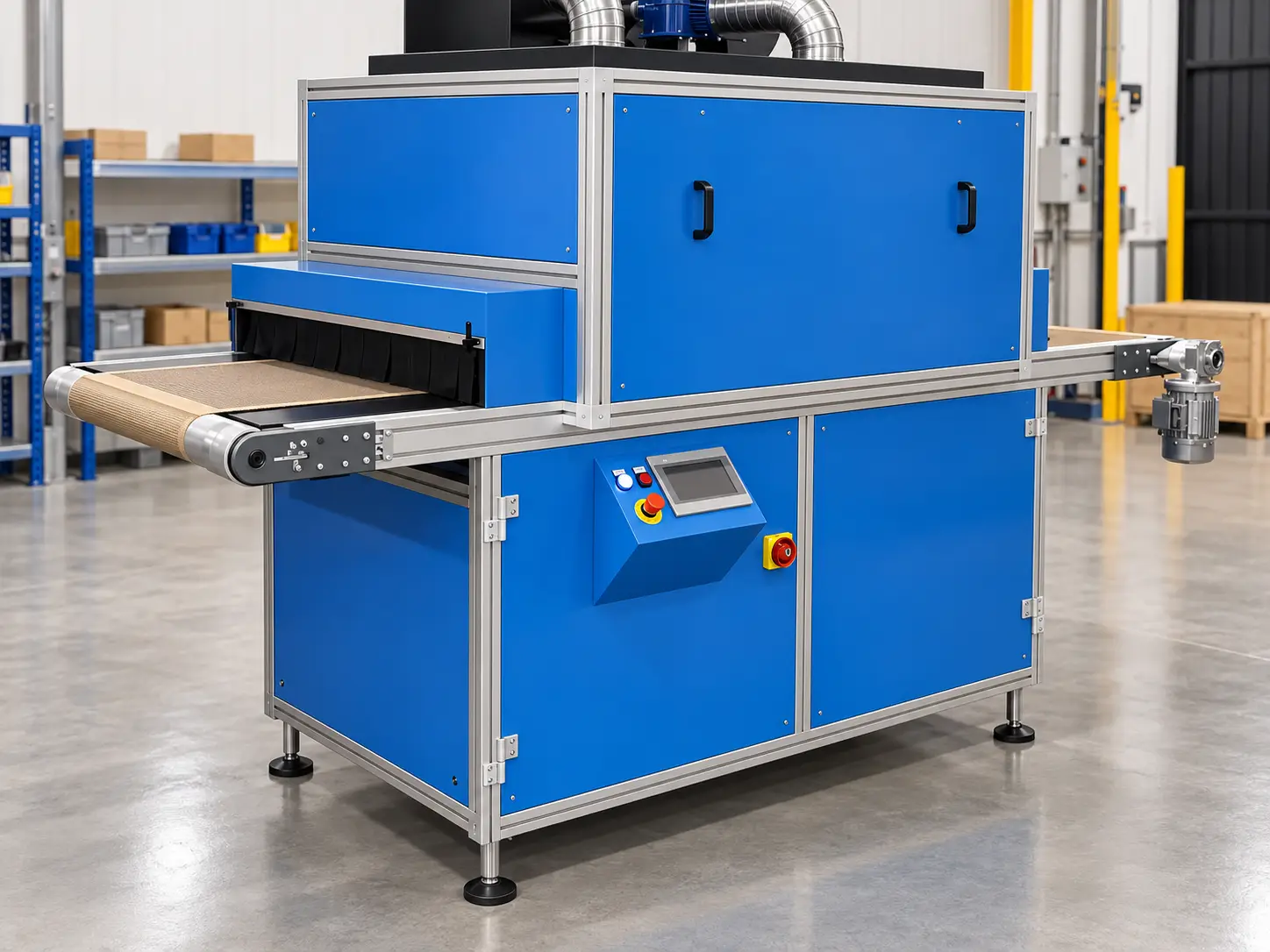
UV and UV LED Systems Designed Around the Finishing Process.
We develop and integrate UV systems for curing compatible paints and coatings on wood and wood-based materials. The configuration starts with the actual process: chemistry, substrate, geometry, speed, thermal management, power supply and control.
Fillers, sealers, basecoats and topcoats do not require the same UV exposure.
In lines for panels, parquet, MDF/HDF and natural wood, the UV system needs to be understood as part of the finishing cycle. Pre-gelling, pinning, intermediate curing and final curing serve different purposes: stabilising a layer before the next one is not the same as completing the crosslinking of the topcoat.
We therefore assess the formulation, deposited thickness, roller application or other application method, line speed, working width, substrate temperature and source sequence. Where the chemistry allows, a hybrid UV LED and lamp configuration may make more sense than replacing all sources indiscriminately.
The information we need: panel or product type, coating at each station, coat weight/thickness, speed, width, lamp-to-product distance, maximum acceptable temperature and the result required before the next layer.
From coating to curing.
We do not size the system by starting with the number of lamps. First, we analyse the coating, substrate, geometry and line speed; only then do we define the source, reflectors, power and thermal management.
Substrate preparation
Wood species, surface, primer, basecoat and part condition affect the entire finishing cycle.
Coating application
Formulation, thickness and application method determine the UV treatment to assess.
UV irradiation
Spectrum, dose, irradiance and source geometry are related to line speed.
Thermal management
Ventilation, cooling and extraction are sized together with the source.
Outfeed and subsequent operations
The system is integrated with consideration for handling, final quality and the next production stage.
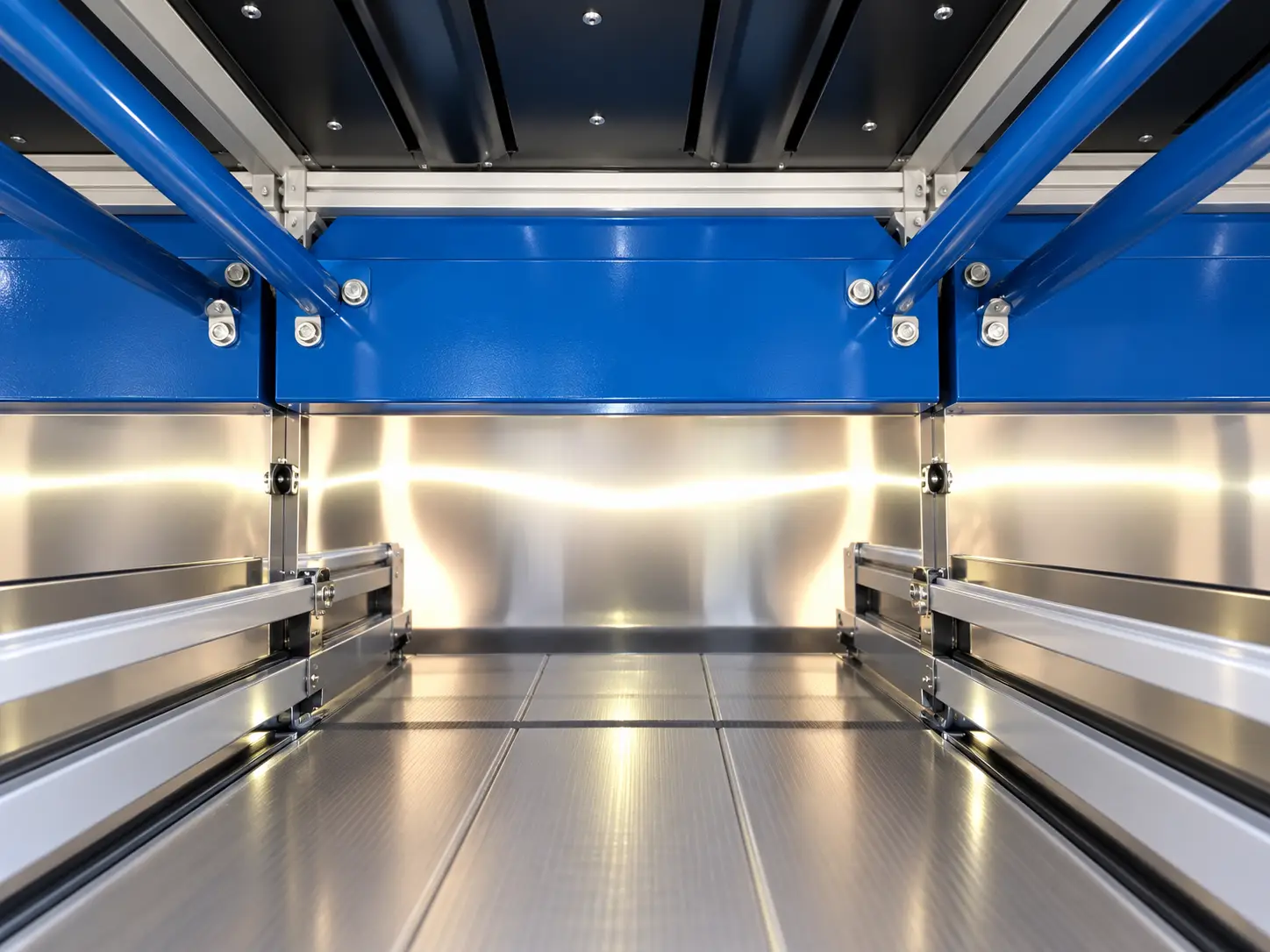
The UV module is built around the machine.
We can develop a UV assembly for a new line or work on an existing system, retaining what remains suitable and upgrading the parts that limit the process, stability or control.
Conventional UV, UV LED or a hybrid solution?
In wood finishing, the technology is chosen according to the coating formulation, substrate and production cycle. LED can offer significant benefits where the chemistry is compatible; hybrid configurations allow different sources to be combined within the same process.
Industrial UV lamps
An established solution for many UV coating curing processes in the wood-finishing sector.
The design coordinates the source, reflectors, power supply, cooling and control.
Where the chemistry is compatible
The photoinitiator, wavelength, irradiance and dose need to be consistent with the coating product.
Compatibility is checked before a conversion is proposed.
Multiple sources, one process
Where the cycle requires different stages, sequences with conventional lamps, LEDs or dedicated combinations can be studied.
The configuration is defined for the actual line.
UV, power supply and control work as a single system.
The scope may be limited to the UV assembly or include power supply, ventilation, the cabinet and the machine interface. The aim is a solution consistent with the process, not a collection of independent components.
Source, lamp housing, reflectors and thermal management for integration into a new machine.
Upgrading the UV section while retaining structures and handling systems that remain suitable.
A broader intervention involving the source, power supply, cabinet, signals and control logic.
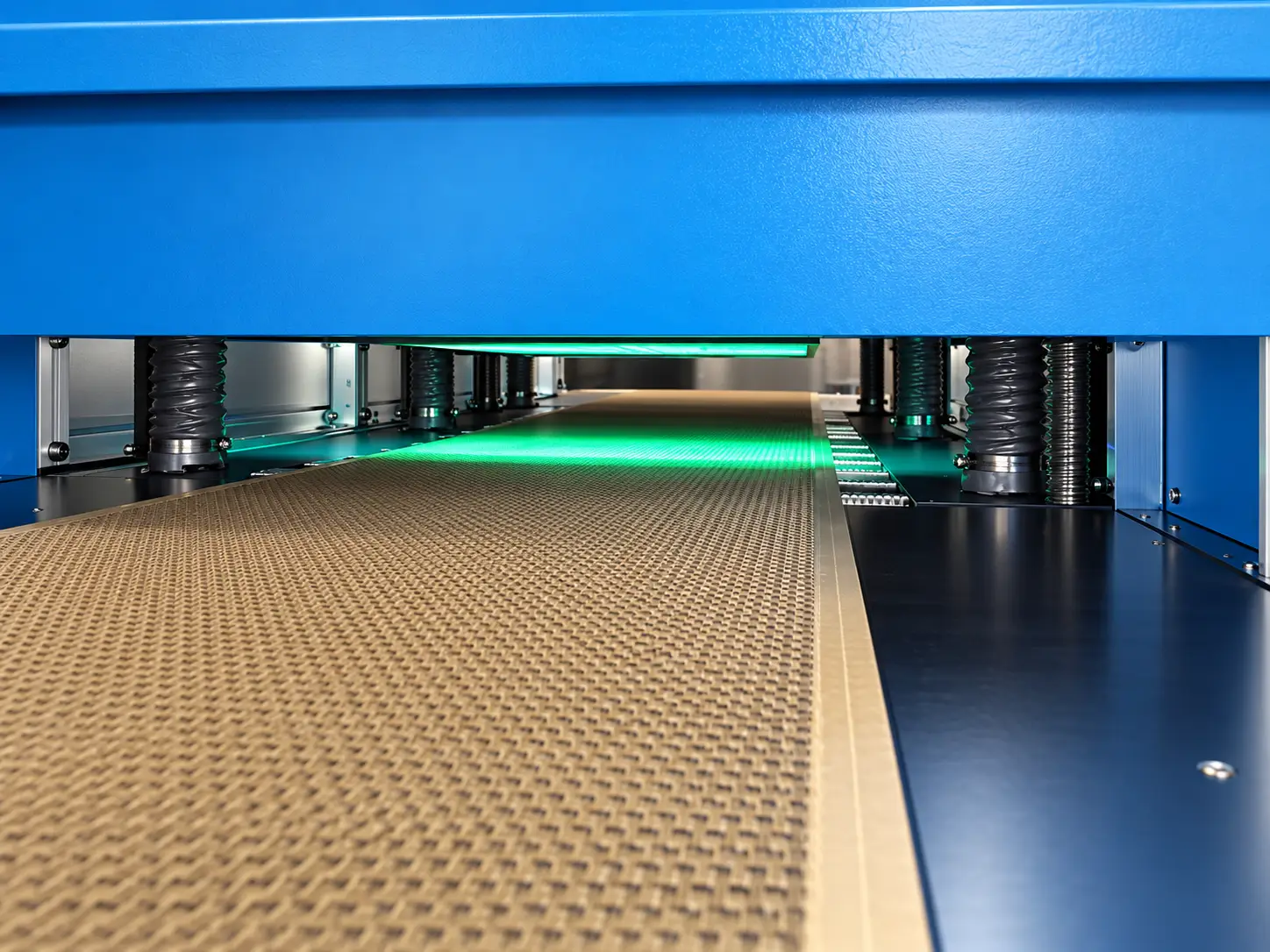
From the source to the electrical cabinet.
A professional solution does not stop at the lamp. The images show some of the elements that may form part of the complete system: reflectors, electrical cabinet, mechanics and machine integration.
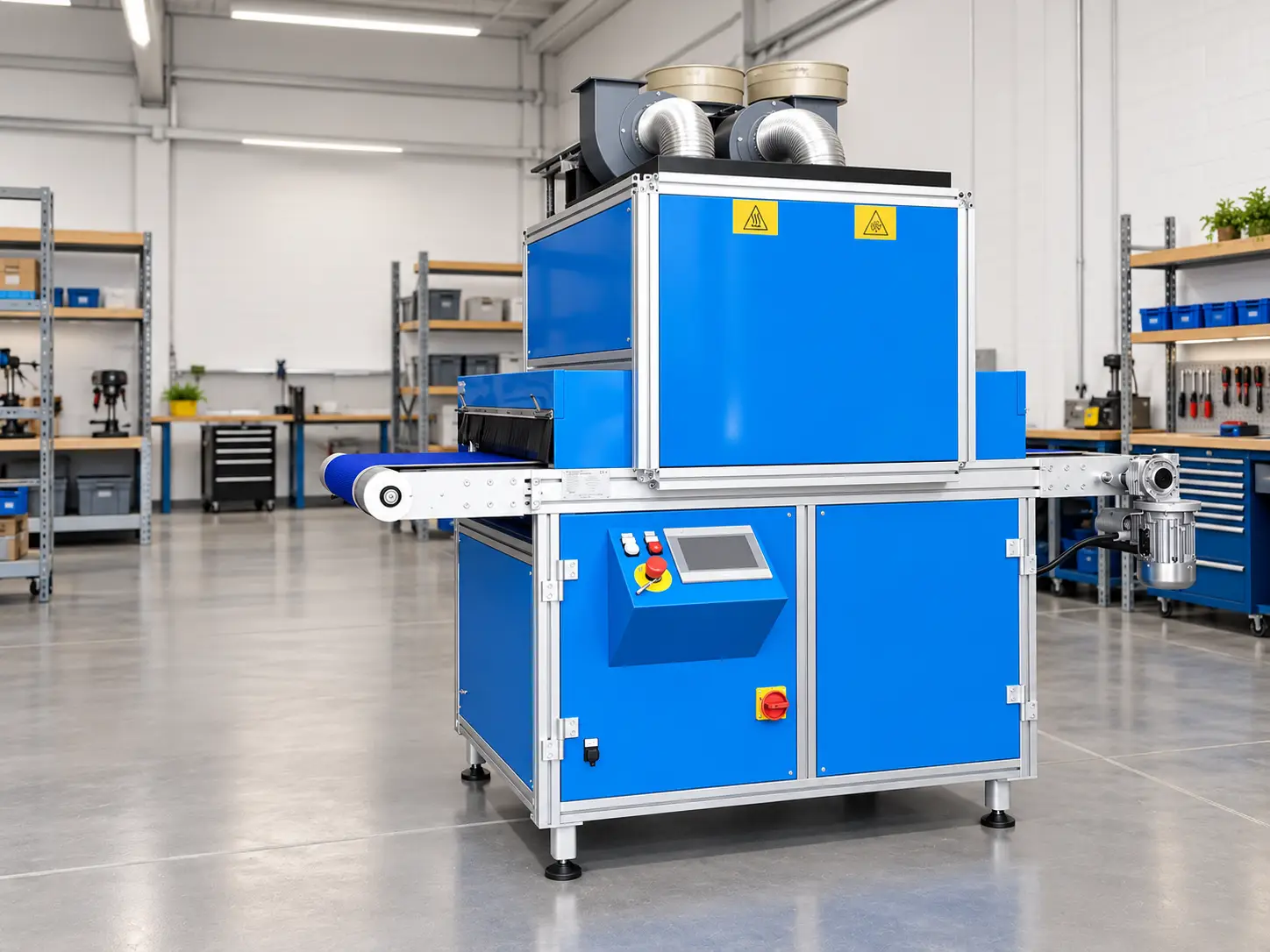
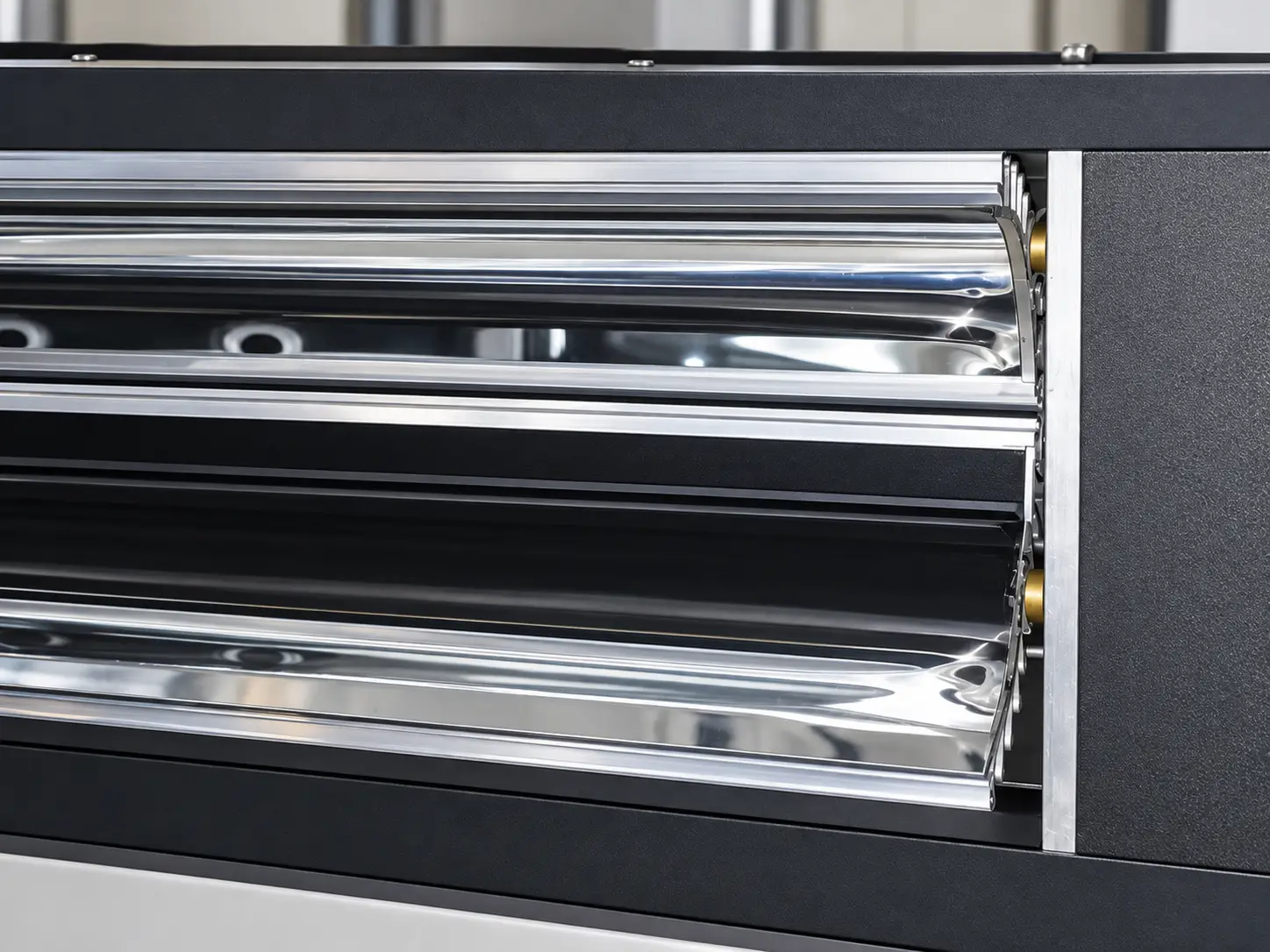
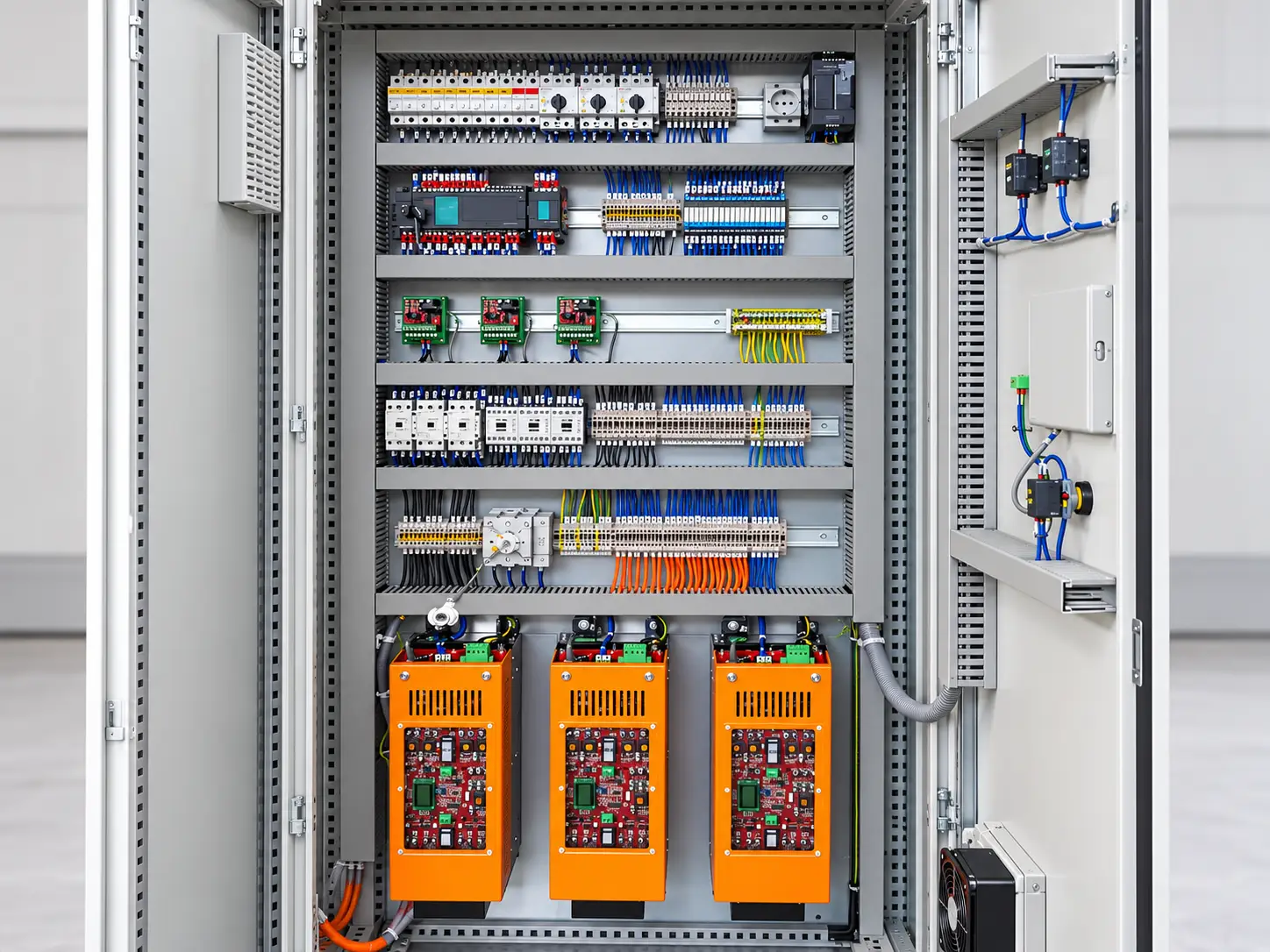
Four areas that need to work together.
To achieve stability and repeatability, the source, mechanics, thermal management and control need to be sized as a single system.
Geometry, reflectors, shielding and source arrangement are defined for the machine.
A conventional lamp or LED is chosen according to the chemistry, dose and required result.
Cooling, ventilation and extraction maintain controlled operating conditions.
Power supply, permissive signals, states and signals are prepared for communication with the line.
From flat surfaces to profiles.
Configurations vary with part geometry, application method and coating system. Typical applications may include panels, parquet, doors and profiles.
Panels
Parquet and flooring
Doors and cabinet fronts
Profiles and components
Useful information for an initial assessment includes the coating's technical data sheet, substrate type, applied thickness, working width, line speed, part geometry, maximum acceptable temperature and existing machine data.
Before designing the UV system.
Is conversion from conventional UV lamps to UV LED always possible?
No. Compatibility depends on the coating formulation and photoinitiator. Before proposing a conversion, we check wavelength, irradiance, dose and the required result.
Can an existing coating line be upgraded?
Yes, where the structure, transport and machine condition allow. We can assess retrofitting the UV assembly or more extensive revamping of the electrical and control systems.
Do you also handle cooling and extraction?
Yes. Thermal management is considered together with the source because it affects both UV assembly operation and the behaviour of the substrate and coating.
Can you interface the UV system with the PLC and main line?
The UV system cabinet can be prepared to exchange permissive signals, states, alarms and commands with the main machine. The logic is defined according to the installation.
How is UV power sized?
Power is not chosen in isolation. It needs to be related to spectrum, distance, geometry, line speed, irradiated area and the dose required by the coating product.
What information is needed for an initial assessment?
The coating's technical data sheet, substrate type, line speed, working width, part geometry, application method, maximum acceptable temperature and existing machine data.
Do you have a coating line to develop or upgrade?
Send us information on the coating, substrate, line speed and machine configuration. We can assess the UV, LED or hybrid source, thermal management, power supply and interconnection.