
Electro Tecnology: your technical contact for your equipment.
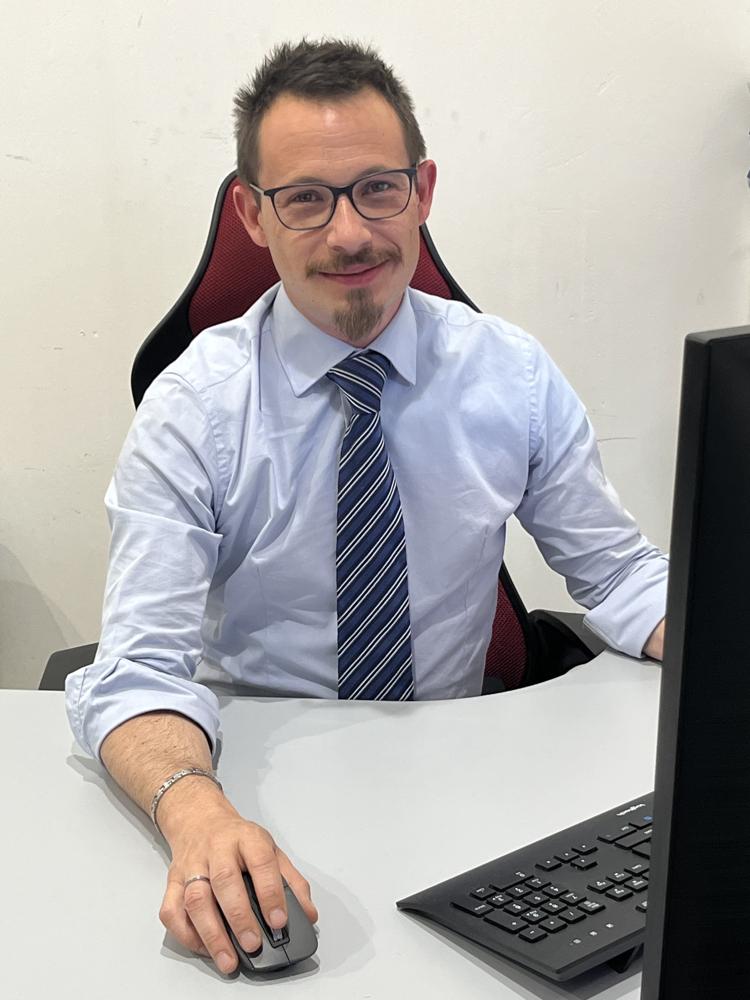
We are an engineering business based in Imola. The owner is directly involved in designing, building and servicing UV, UV LED, IR and automation systems: here you can meet the person responsible for the work and see how responsibilities are defined.
Engineering continues in the workshop and during service work.
The owner is your technical contact and personally handles wiring, programming and work on the machine. This first-hand knowledge helps connect the initial choices with adjustments, testing and subsequent maintenance. The project collection shows how UV curing stations, lamp power and machine controls fit together in actual equipment. Industrial UV engineering projects.
Product, process, constraints, photographs, drawings and objective.
Mechanical components, source, electrical cabinet and automation within the agreed scope.
Tests on the product, operating guidance and a technical contact after delivery.
We operate from Imola. The parts supplied, responsibilities, documentation and subsequent support are defined in the proposal for your equipment.
An engineering history that distinguishes the two businesses.
2003/04 · Early experience
The professional journey begins with electromechanics and UV systems at CEE Electra: construction, wiring and testing form the basis of the working method.
2006 · ELT Electro Tecnology
The business is established: engineering, custom machines, electrical cabinets, installations and service develop through close contact with customers.
2023 · Electro Tecnology SRLS
After ELT ceases trading, a company with a separate VAT number is established. The team's experience continues in the new organisation.
Today · The work continues
UV, UV LED, IR and automation are selected to suit the process. Historical milestones and photographs are collected in our history.
One technical contact, clearly defined responsibilities.
We get to know the machine with the people who use it.
We gather information about the production issue, working conditions and the details available. The scope identifies the parts to retain, those requiring work and the checks to be agreed.
We work with your engineering department.
Someone must take responsibility for dimensions, signals, power supply, cooling and documentation. The proposal clarifies the boundary between the Electro subsystem and the manufacturer's machine.
Explore our approach for machine manufacturersMake our role clear and easy to assess.
Share the objective, application and parties involved. We define activities, limits, information needed and verification criteria, so you can present your customer with a proposal that assigns responsibilities explicitly.
Start a discussion for your customerWhat you receive before deciding.
Initial assessment
Options, limitations and missing information based on the material, machine and objective.
Scope
Components, integration, interfaces and responsibilities shared between us, the customer and the manufacturer.
Tests
Samples, measurements and criteria to agree where compatibility has not yet been demonstrated.
Lead times and costs
A quotation matched to the defined scope, without standard prices for different machines.
A description, a photograph of the machine or part and your contact details are enough for an initial discussion.
Assess our experience through actual projects.
The Projects collection presents six cases with photographs, the scope of work and available data. Use it to assess how relevant our experience is to your machine.
Data from a case applies to that specific project: performance in your application requires specific checks.
Technical collaborations with a defined role.
We work with specialists in complementary technologies. Components, integration activities and each party's responsibilities are defined in the proposal: collaboration does not imply certification or an exclusive supply agreement.

HPE Power
Technologies for electronic power supplies for high-power UV lamps and the development of industrial UV LED systems.

Unionprint
Collaboration in UV technologies and applications for printing and industrial treatment processes.
Technical expertise to explore when needed.
Exposure of the part depends on the combination of product, source, geometry, power supply and cycle. Our proposal describes the parts and interfaces we take responsibility for.
Explore the technical checks: process, source, air and control
| Decision | What we check | Why it matters to the customer |
|---|---|---|
| Process and chemistry | Material, formulation, result and curing criterion; IR if a separate thermal stage is needed. | The solution must work on the product, not just on a data sheet. |
| Source and geometry | Compatible discharge lamp or LED, optics, distance, width, shadows and adjustments. | The radiation must reach the required area of the part. |
| Air and temperature | Cooling of the assembly and product, extraction and maintenance access. | Cycle stability and physical integration into the machine. |
| Electrical cabinet and control | Power supply, PLC/HMI, enable signals, interlocks, alarms and communication with the line. | The UV system follows the production sequence and makes its status clear. |
| Final verification | Agreed tests on the sample and line, with defined responsibilities and documentation. | A proposal that can be assessed and a shared acceptance criterion. |
This table outlines our expertise: each supply includes only the parts defined in the project.
Which part of the project can we handle?
Do you build complete machines or components?
Both, as needed: most often subsystems for integration into a line, sometimes a special machine with a dedicated conveyor. We always define the scope of supply.
Do you use only one UV technology?
No. Discharge lamps, doped sources, UV LED and IR serve different purposes. The choice depends on the formulation, material, geometry and tests on the product.
Do you also work with machine manufacturers?
Yes. We coordinate dimensions, interfaces, signals, air requirements and integration responsibilities with their engineering department. Explore our OEM approach.
Do you also support installed equipment?
We assess service, spare parts, repairs and machine upgrades. Compatibility and the possibility of reusing parts require diagnosis of the component and machine.
Let's discuss your machine and the result you want to achieve.
To get started, all we need is a process description, a photograph or layout, your objective and contact details. We will explain which checks are needed for a concrete proposal.