
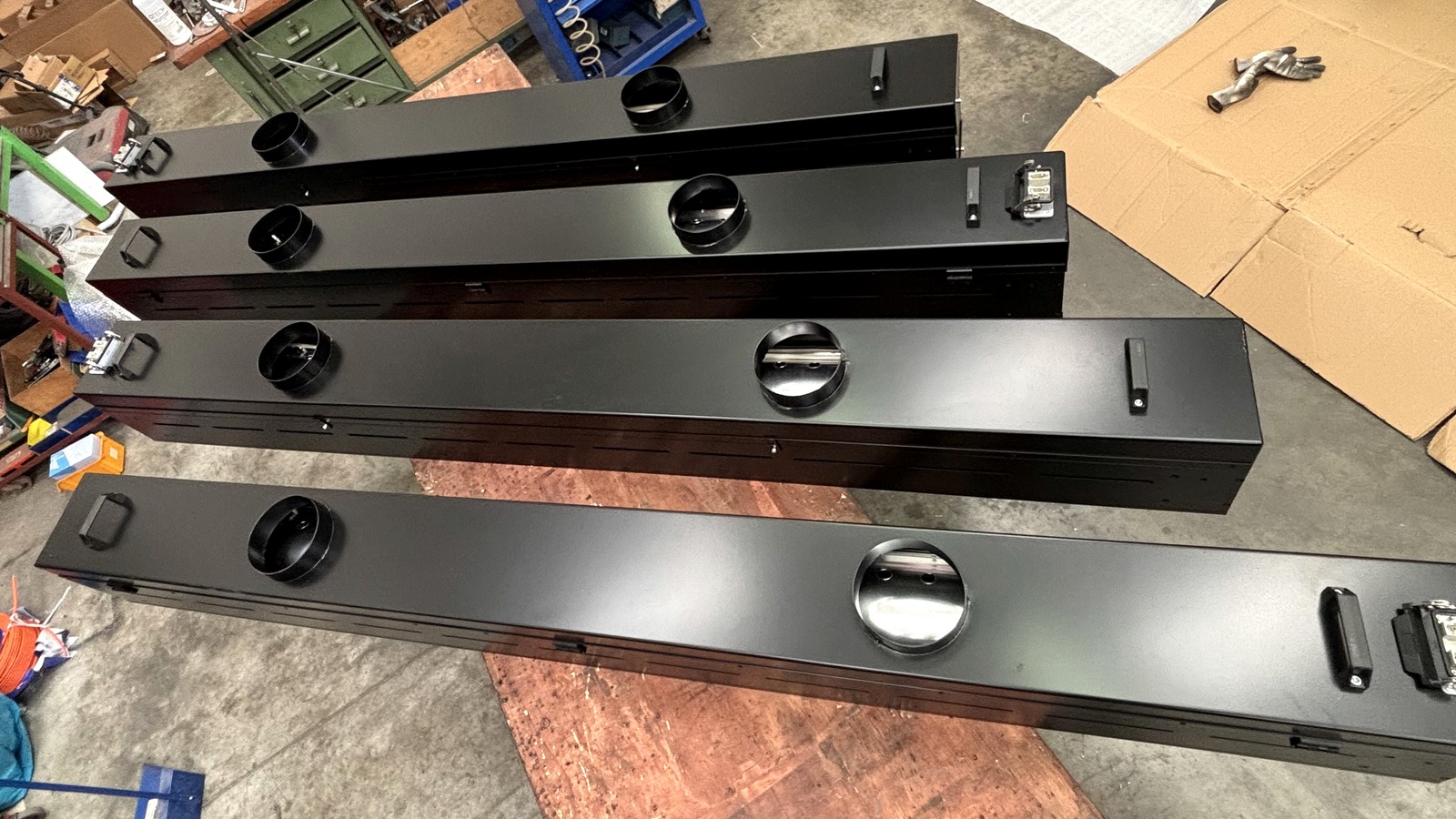
UV Systems for Marble and Natural Stone Slabs.
We design and supply UV subsystems for treating marble and natural stone slabs with compatible UV resins. The configuration is sized around the actual process: working width, chemistry, source, extraction, power supply and interconnection with the machine.
With marble, the aim is not simply to dry: it is to stabilise the resin within a demanding mechanical processing cycle.
The applications described concern slabs exclusively. Resin, geometry, handling and the position of the treatment within the production cycle are assessed for the specific line.
Slab width and mass, flatness, roller speed, transverse uniformity, heat extraction, lamp-housing access and protection from dust contamination are machine parameters, not secondary details.
The information we need: slab material and format, resin used, working width, speed, inlet temperature, the stage of the cycle where treatment takes place, and the space available for UV, extraction and maintenance.
From the material to the UV system.
The number of lamps is not the starting point. First, we analyse the process, material, chemistry used, slab geometry and required productivity.
Slab infeed
Dimensions, working width and surface condition determine the treatment geometry.
Resin application
The formulation and photoinitiator determine compatibility with the source and the UV dose required.
UV irradiation
The source, reflectors, working distance and radiation distribution are sized around the actual cycle.
Extraction and thermal management
Ventilation, extraction and temperatures are considered together with the source to maintain process stability.
Transfer to subsequent operations
The UV subsystem communicates with the line through states, permissive signals, alarms and process logic.
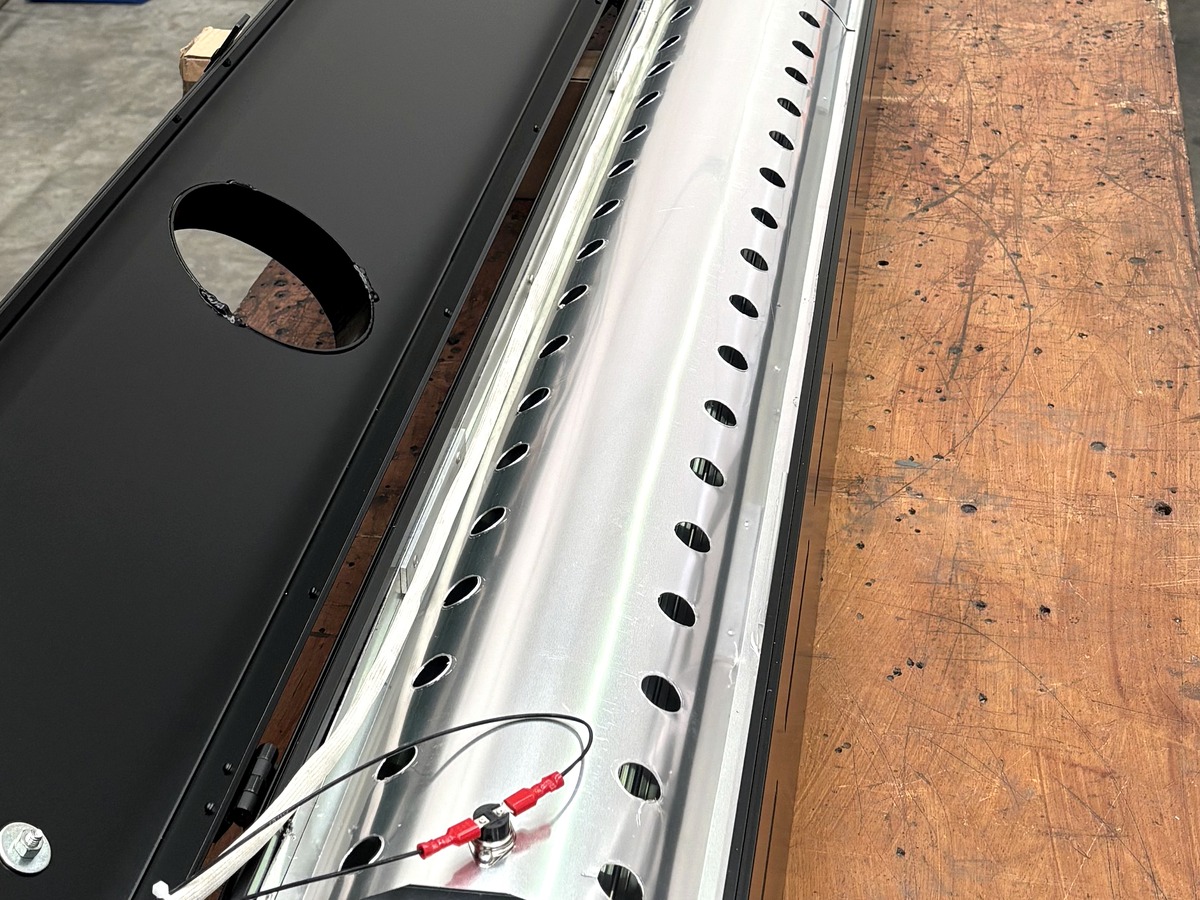
The irradiation arrangement is designed around the process geometry.
The lamp housing is not an isolated component: shielding, reflectors, source, ventilation and working position need to function as a single subsystem.
Dimensions and working width are defined according to the machine and the format to be treated.
The source is chosen according to the chemistry, required dose and irradiation geometry.
Radiation distribution is managed to achieve consistent treatment across the working area.
Extraction and thermal management are sized together with the UV assembly.
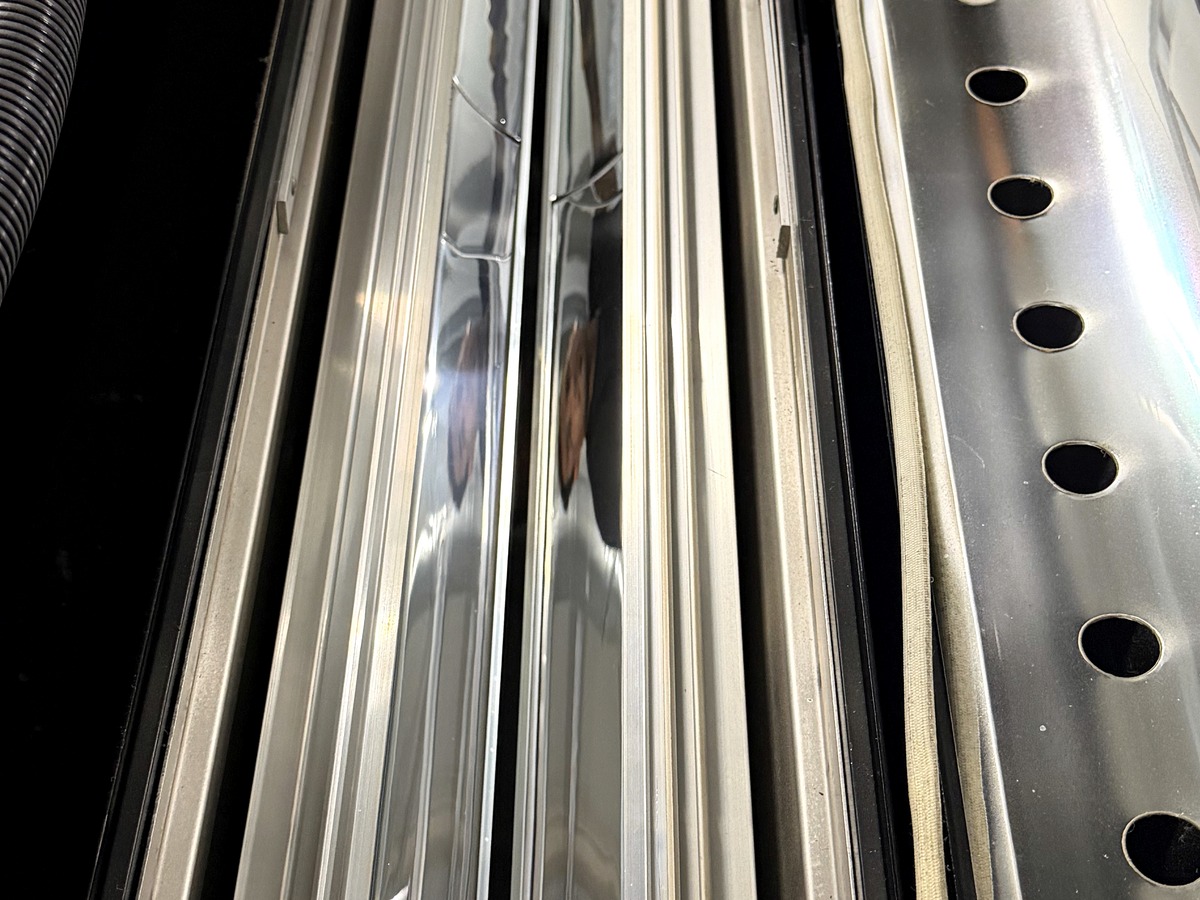
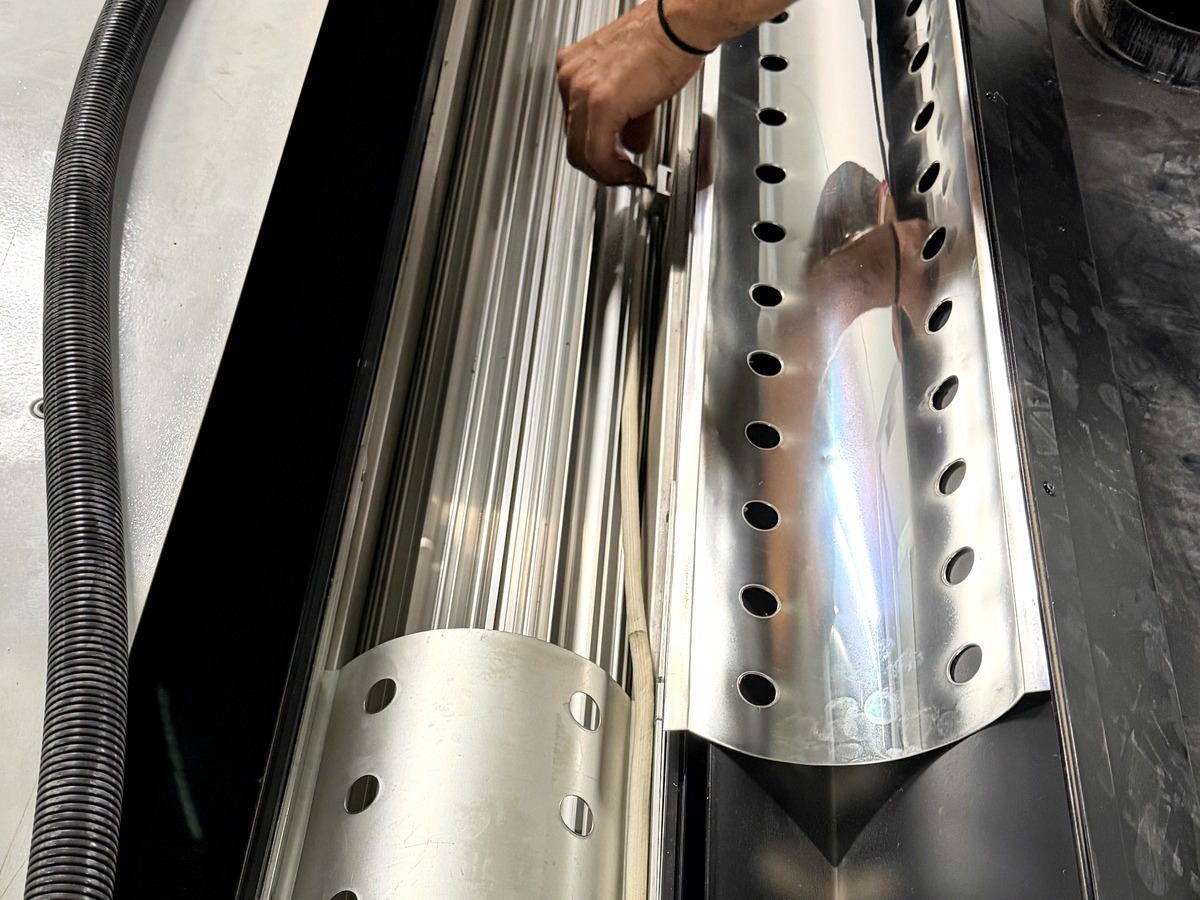
From the reflector to assembly of the UV unit.
The photographs show real components and work used for configurations dedicated to the marble and natural stone sector.
The UV configuration depends on the slab, resin and line.
Sizing needs to relate chemistry, material, geometry, productivity, thermal management and line control.
Resin and photoinitiator
Compatibility between the formulation and the source is one of the first aspects to check.
Stone and surface
Material type and surface condition affect the process to be achieved.
Working width
The lamp housing is sized for the actual width, including widths over 2 metres.
Speed and cycle
Exposure time and productivity need to be consistent with the main machine.
Temperature and extraction
Ventilation, extraction and heat management are considered from the design stage.
Control and interconnection
Permissive signals, alarms and logic are coordinated with the machine or line manufacturer.
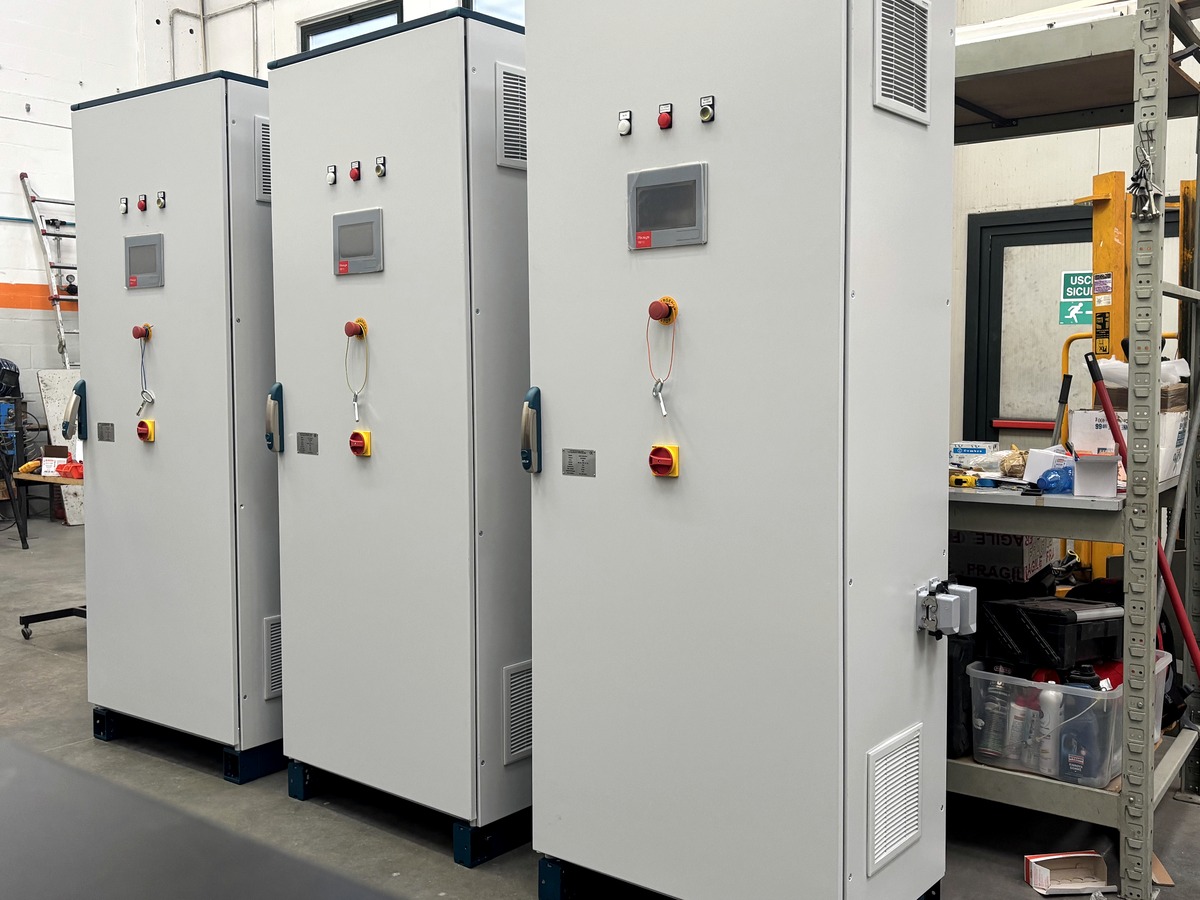
The electrical cabinet is part of the UV system.
Power supply, protective devices, control and interconnection are developed together with the UV assembly, so that the subsystem can communicate correctly with the main machine.
A complete subsystem, ready for integration into the machine.
The scope of supply may include only the UV assembly or a more complete set of components coordinated electrically and functionally with the line.
Lamp housing and source
Mechanical assembly, reflectors, dedicated lamps and shielding sized for the application.
Dedicated extraction
Ventilation and extraction coordinated with the source, geometry and machine conditions.
Power and control cabinet
Power supply, protective devices, adjustments, permissive signals and interface signals.
Machine interconnection
Provision for communication with the line manufacturer and the main machine's logic.
Frequently asked questions about UV systems for marble.
Can systems be built for widths greater than 2 metres?
Yes. Working width is one of the main sizing parameters, and the lamp housing is developed around the actual geometry of the machine and the slab to be treated.
Does the system also include extraction and an electrical cabinet?
The supply may include the lamp housing, dedicated sources, extraction system, power supply and control cabinet, depending on the scope agreed for the project.
Can the UV assembly be interconnected with a machine built by another OEM?
Yes. Status signals, permissive signals, alarms and process logic can be prepared for integration with the main machine, with the interface agreed with its manufacturer.
Can UV LED always replace a conventional UV source?
No. Any use of UV LED needs to be assessed against the formulation, photoinitiator, required wavelength and the dose needed by the process.
Components prepared for marble-processing systems
Do you have a UV process for marble to develop?
Tell us the working width, material, chemistry used, machine cycle and production objective. Together, we can assess the UV subsystem and its integration.