Our History
Our entrepreneurial journey began in 2006 with ELT Electro Tecnology, following our first experiences in electromechanics and UV systems. Since then, design, manufacturing and service have developed together, through direct work with machines and customers.
Today, that experience continues at Electro Tecnology SRLS: a renewed identity, with the same passion for our work and the same attention to every project.
Tell us about your projectFrom electromechanics to industrial UV systems.
In 2003/2004, after deciding to leave formal education, the founder began working at CEE Electra, a small family-run company in Imola. Its owner was the designer, inventor and builder: the person who developed solutions and spent much of each day in the workshop, with hands marked by manufacturing, assembly and testing. The first trade learned was the construction of electromechanical transformers: windings, laminations, wiring, resin encapsulation and testing. UV, IR and on-site customer service followed.
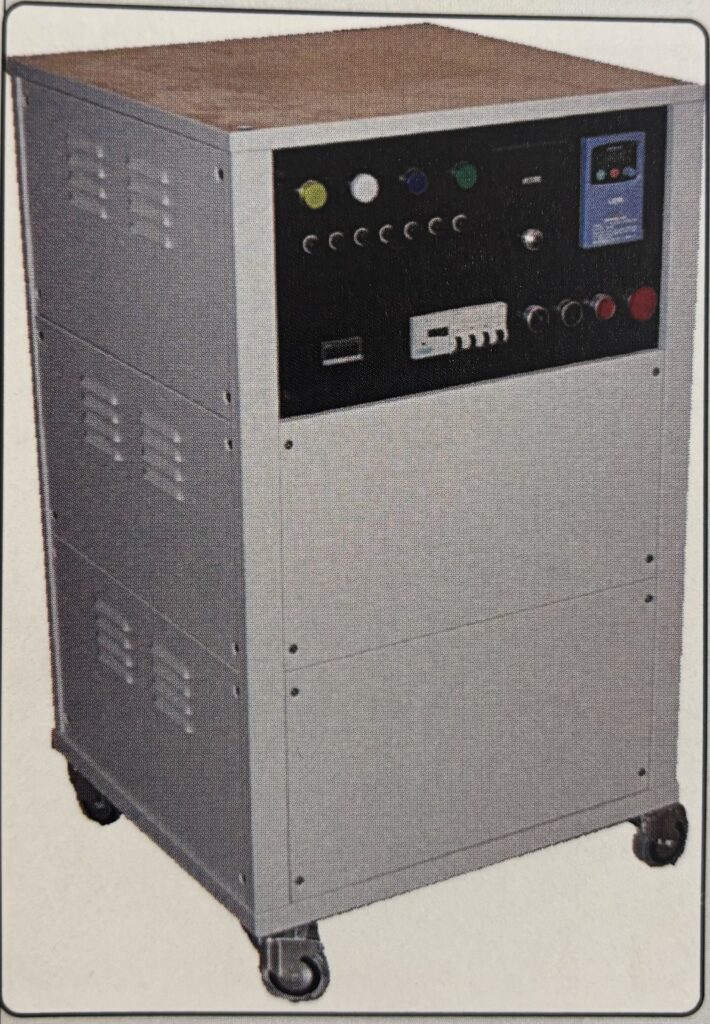
A solution built around the process.
A practical technical education
High-quality transformers, prototypes and UV systems at a time when many applications were still in their early stages.
ELT Electro Tecnology is established
A small workshop, limited equipment, machines assembled by day and quotations, drawings and designs prepared at night.
The same principle
The owner still carries out service work, wiring and PLC programming: engineering and hands-on work remain closely connected.
From the workshop to today's projects.
Hand-built transformers, custom machines, trials with customers and systems returned to service: practical work has shaped our development.
Learning by building
The professional journey starts with building complete electromechanical transformers and taking the first steps in UV and IR processes. Windings, wiring and testing form the basis of our approach to a machine: knowing its components and understanding how they work together.
ELT Electro Tecnology is established
A small workshop and limited equipment: machines are assembled during the day, while drawings, designs and quotations are prepared at night. Early projects include a rotary system for a screen-printing machine in Serbia, with a very low infeed, a standard-height outfeed and mechanical adjustment of lamp height. The solution has to fit the existing machine and the customer's work.
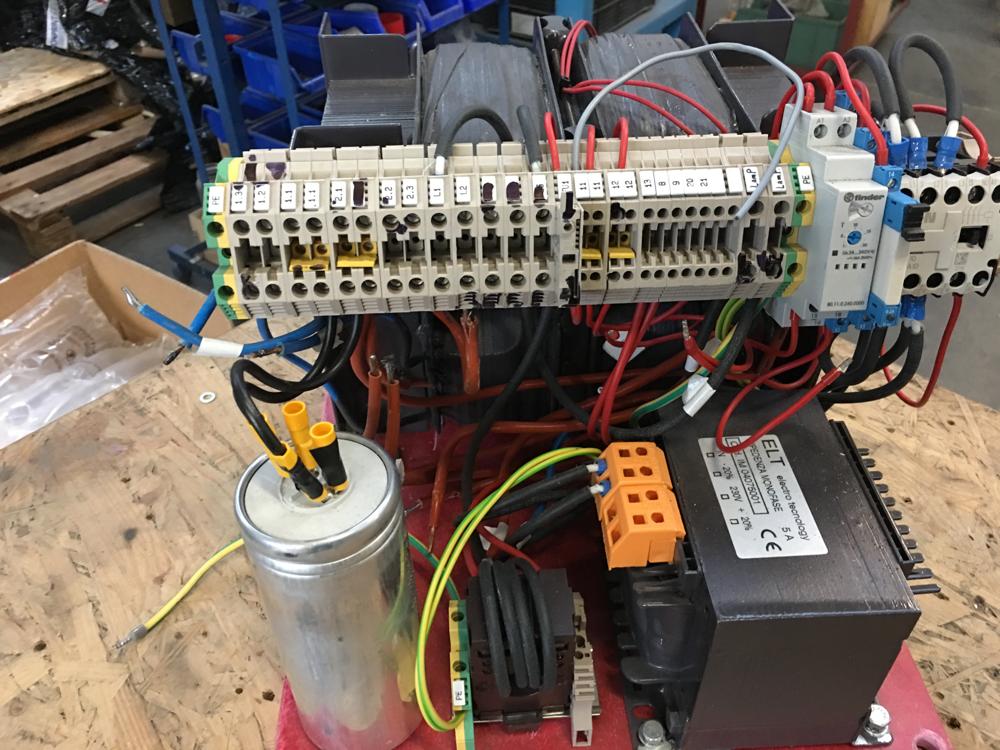
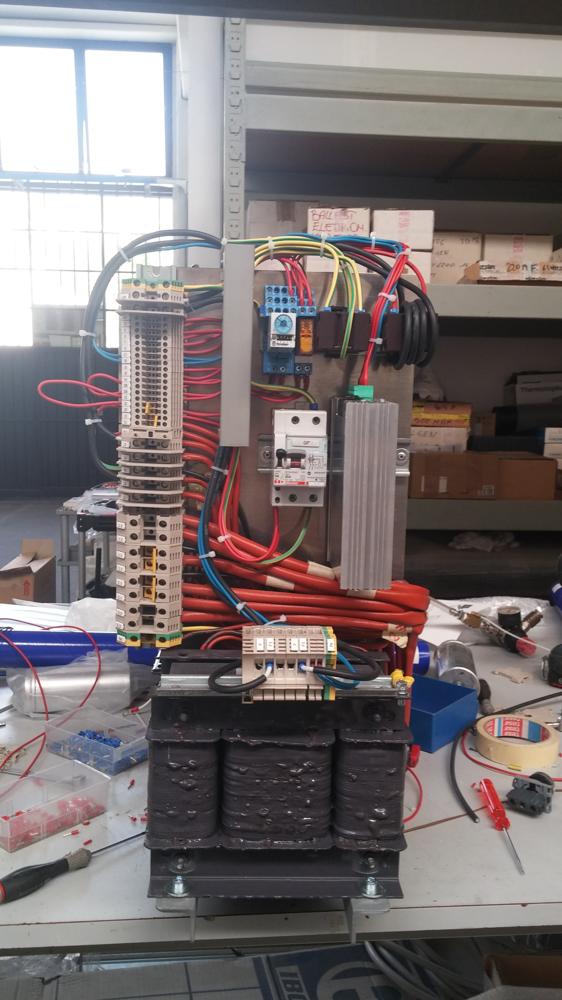
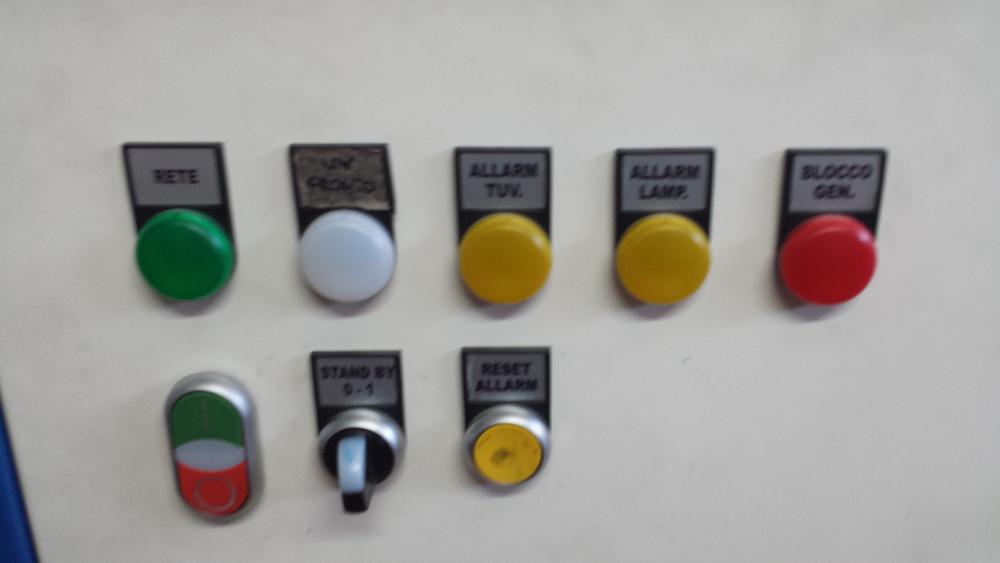
Controls before the PLC
The first electrical cabinets use control consoles without a PLC or operator panel. Push-buttons and electromechanical components manage machine functions, marking a stage before the move towards digital control.
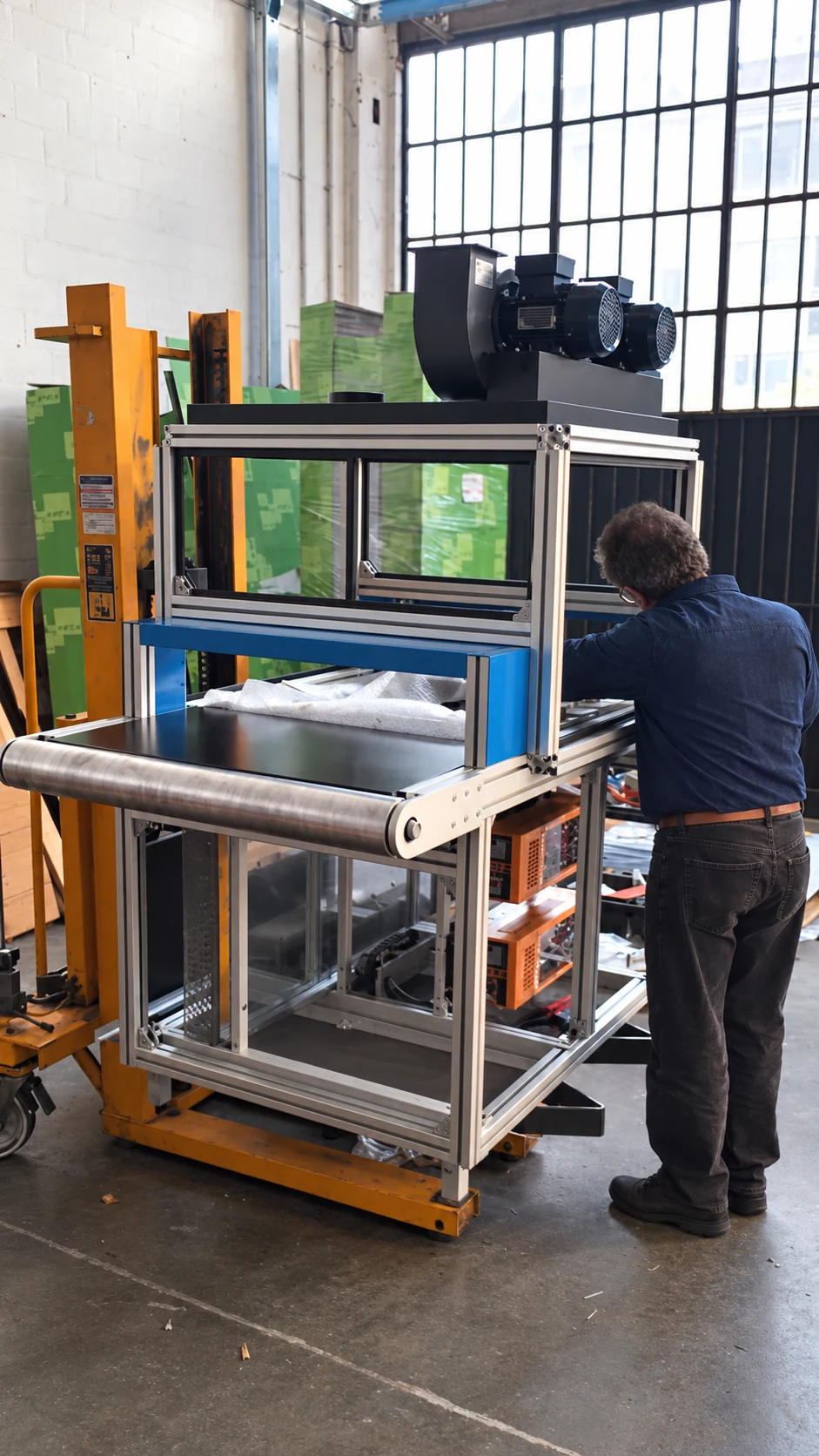
A rotary system takes shape in the workshop
Construction can begin with the frame itself. Our archive records work on a rotary structure from this period. Before wiring and testing, the machine must be built, with its layout and dimensions organised around the required treatment.
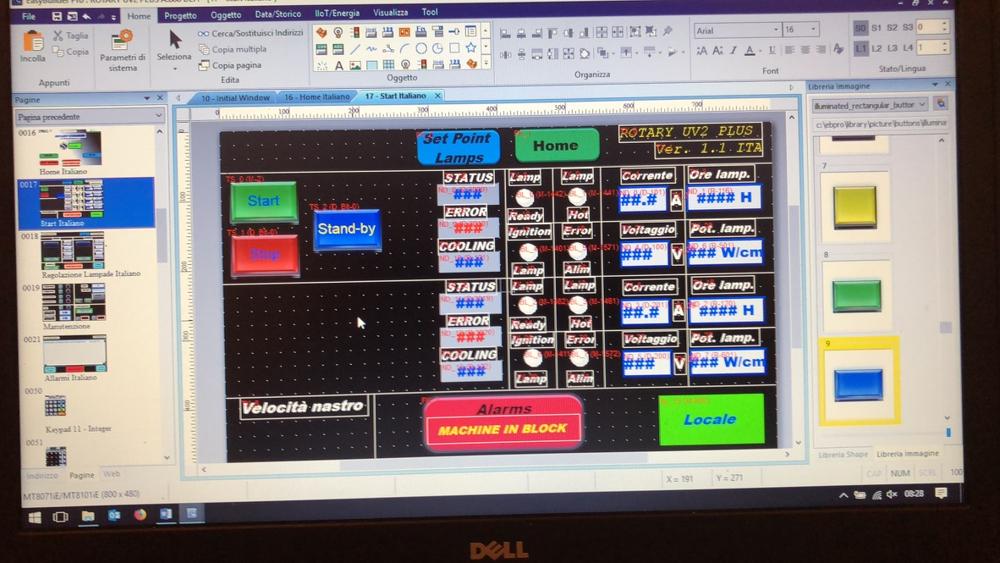
The Rotary UV2 Plus controls
Around 2013, work on the Rotary UV2 Plus for screen printing also includes designing its control interface. The archived screenshot shows the management of lamps, operating parameters and alarms.
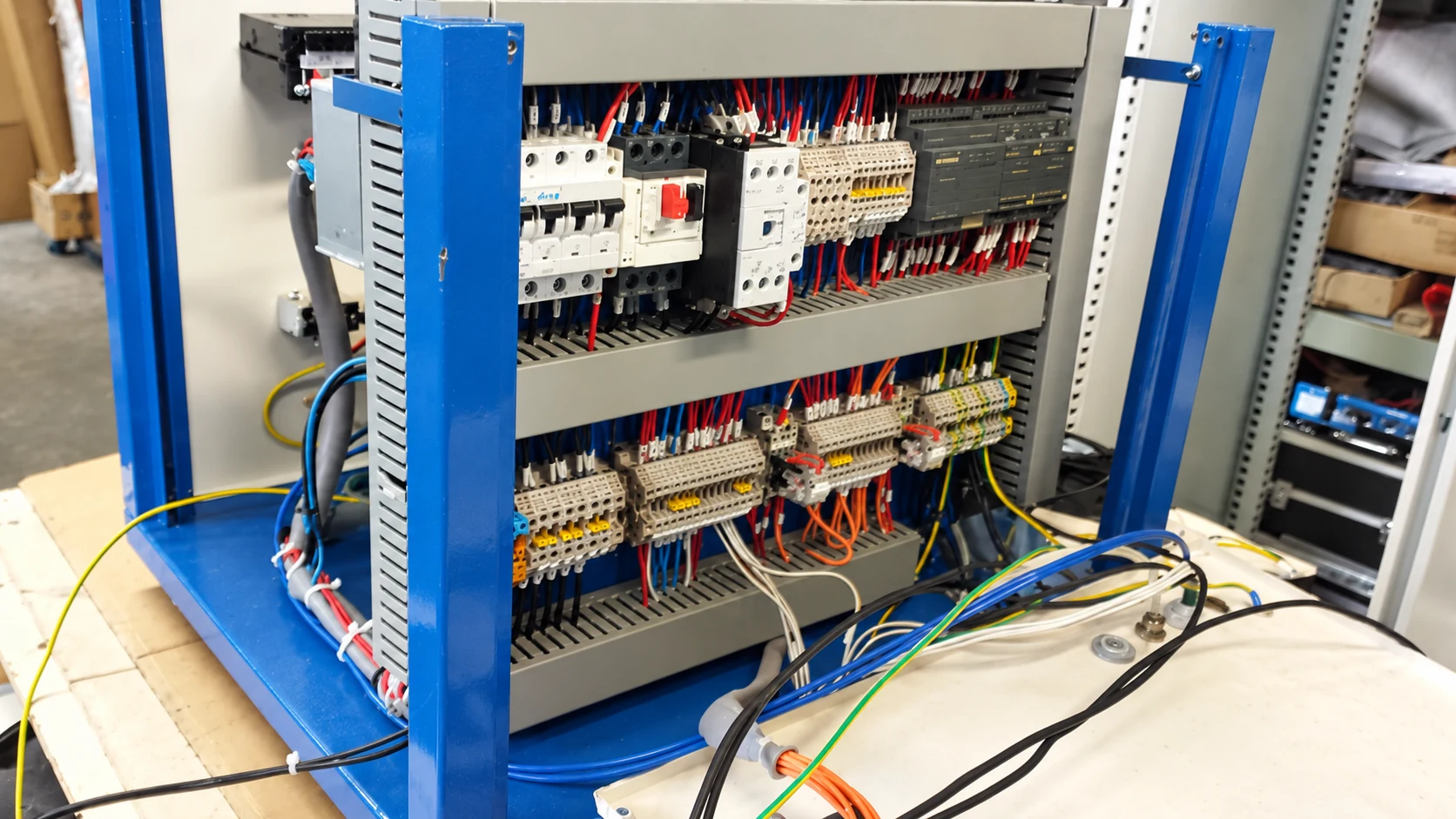
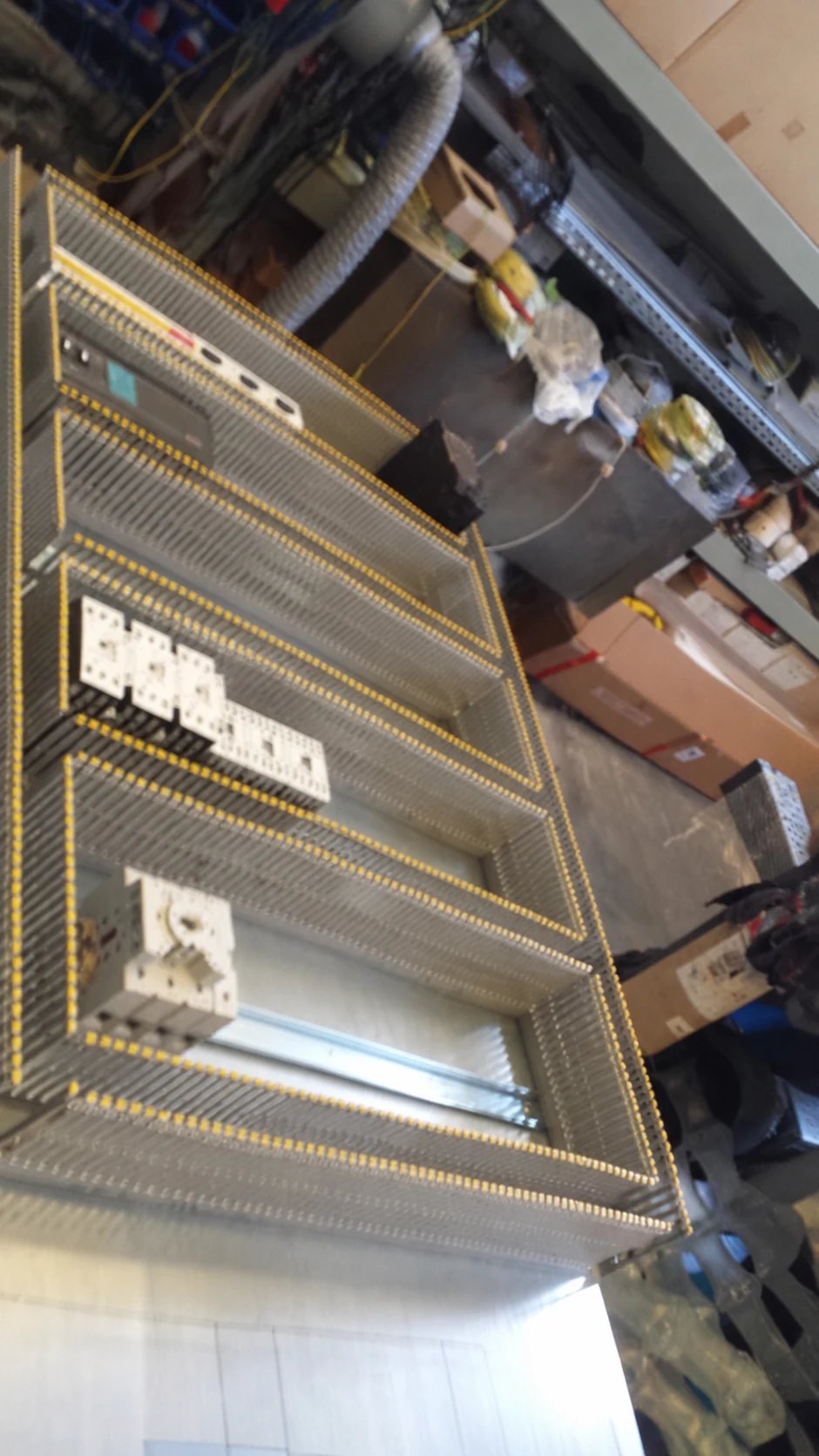
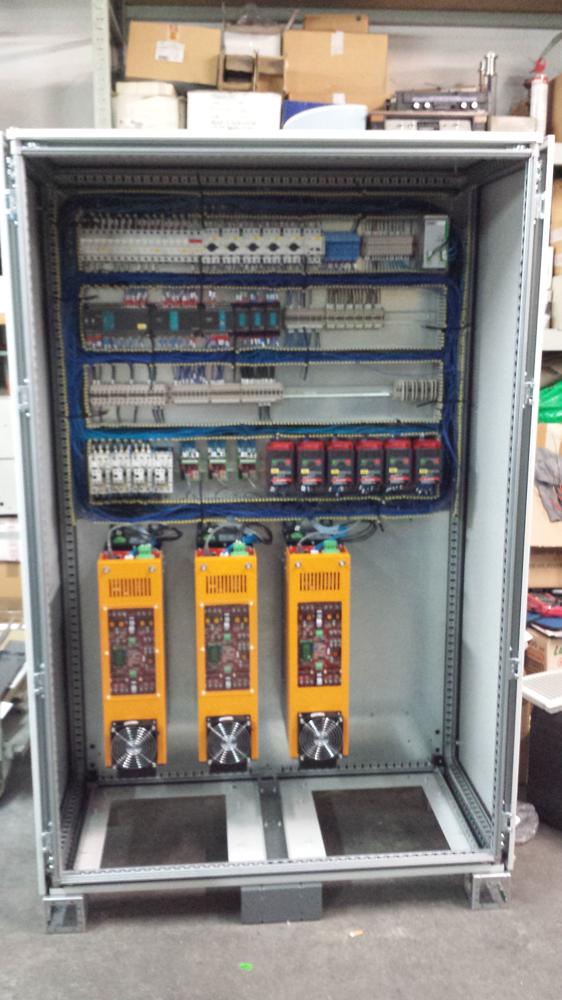
The first standard-format cabinets
Wiring is prepared in the workshop for the first standard-format cabinets. Component layout and the manufacturing workflow are refined, while design, assembly and checking continue to be handled directly.
Testing together with the customer
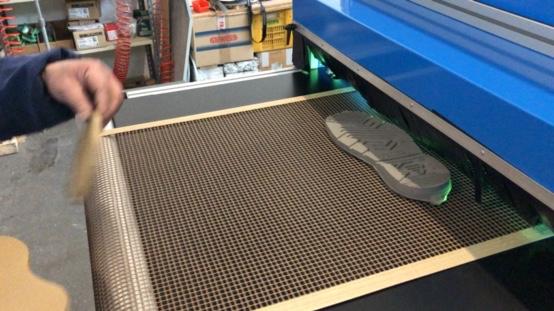
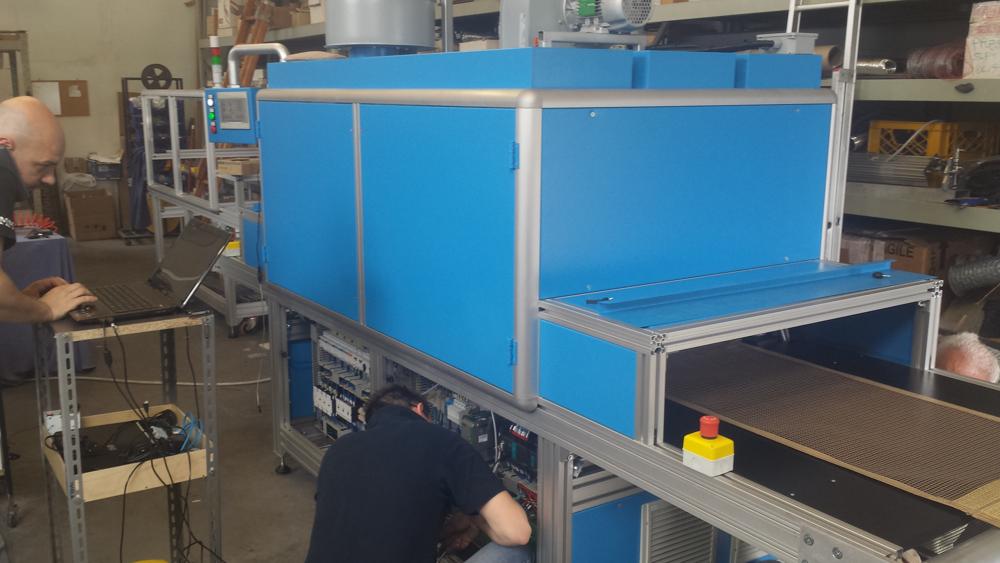
A Rotary UV4 Compact is tested with a footwear customer to check the primer treatment on the underside of soles. The trial uses the customer's own soles to verify that the primer is treated correctly.
The journey continues with Electro Tecnology SRLS
Following the closure of ELT, Electro Tecnology SRLS is established as a new company with a separate VAT number. The experience that began in 2006 continues, bringing together engineering, workshop manufacturing, automation and service.

A new identity.
The same passion for building.
Work on systems for the marble industry
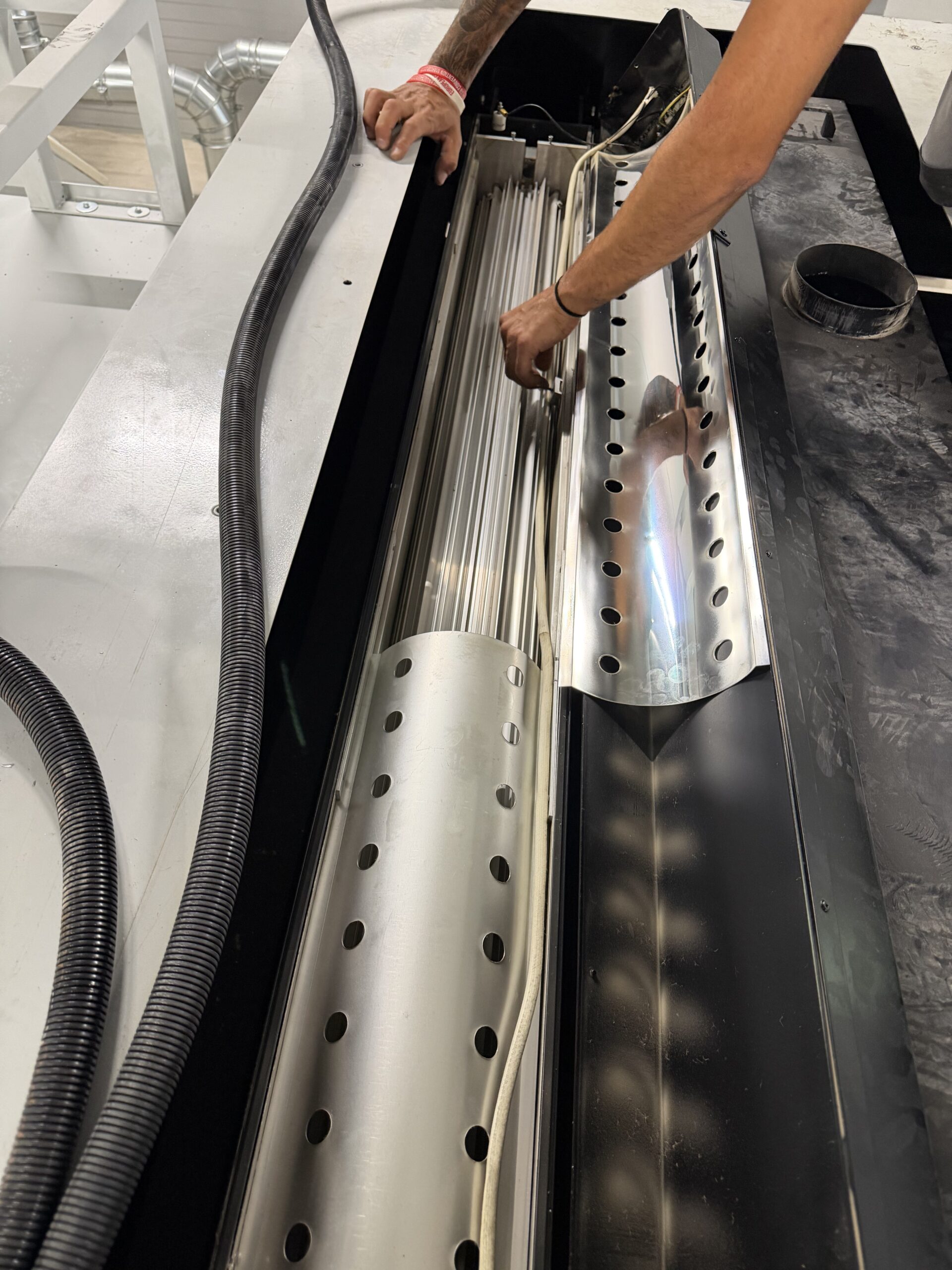
Maintenance and installation of a lamp housing on a system in the marble sector also form part of our history. Alongside new construction, work continues on systems already in service, attending to the parts that need maintenance or replacement.
From electromechanics to digital control
Over time, our work expands to include phase-angle controllers, micro-PLCs, electronic controls, Modbus, EtherCAT, CAN bus, electronic power supplies and UV LED. In revamping projects, replacing lamp housings and power supply assemblies can also involve moving to touchscreen controls. The owner continues to wire, program and carry out service work: more technology, with the same responsibility for the work delivered.
The responsibility of designing and building.
Today, the owner still works in the workshop, carries out wiring, programs controls and personally handles service visits. This choice reflects a passion for the trade and the belief that knowing a machine means being involved in its construction, testing and day-to-day operation.
This direct involvement supports the development of tailored solutions, attention to reliable operation and a practical understanding of customer needs. From the first decisions to the problems that need solving, the relationship remains personal: the person who develops the product takes responsibility for the work and remains involved after delivery.
Understand first. Design second.
We listen to your requirements
We start with the result you need: the product to be processed, production objectives and problems to solve. The initial discussion helps us understand priorities and define the information required for the project.
We assess the machine and process
We study materials, chemistry, operating speed, available space and the system's condition. Where necessary, we inspect production at the customer's site to identify constraints and potential work.
We design the tailored solution
We bring together the mechanical assembly, UV system, power supply and control. We assess alternatives and explain the engineering choices so that the solution addresses the actual needs of the machine and process.
We provide ongoing support
From commissioning to service, we remain the technical point of contact for the system. We handle maintenance, repairs and upgrades, also assessing whether existing components can be restored.
From experience to energy efficiency.
In 2026, La Rivista del Colore / Verniciatura Industriale featured Electro Tecnology in an article on optimisation and energy reduction in UV polymerisation processes. It is a natural continuation of the same story: understand the process, measure what can be improved and select the most appropriate technology.
Read the article (Italian) ↗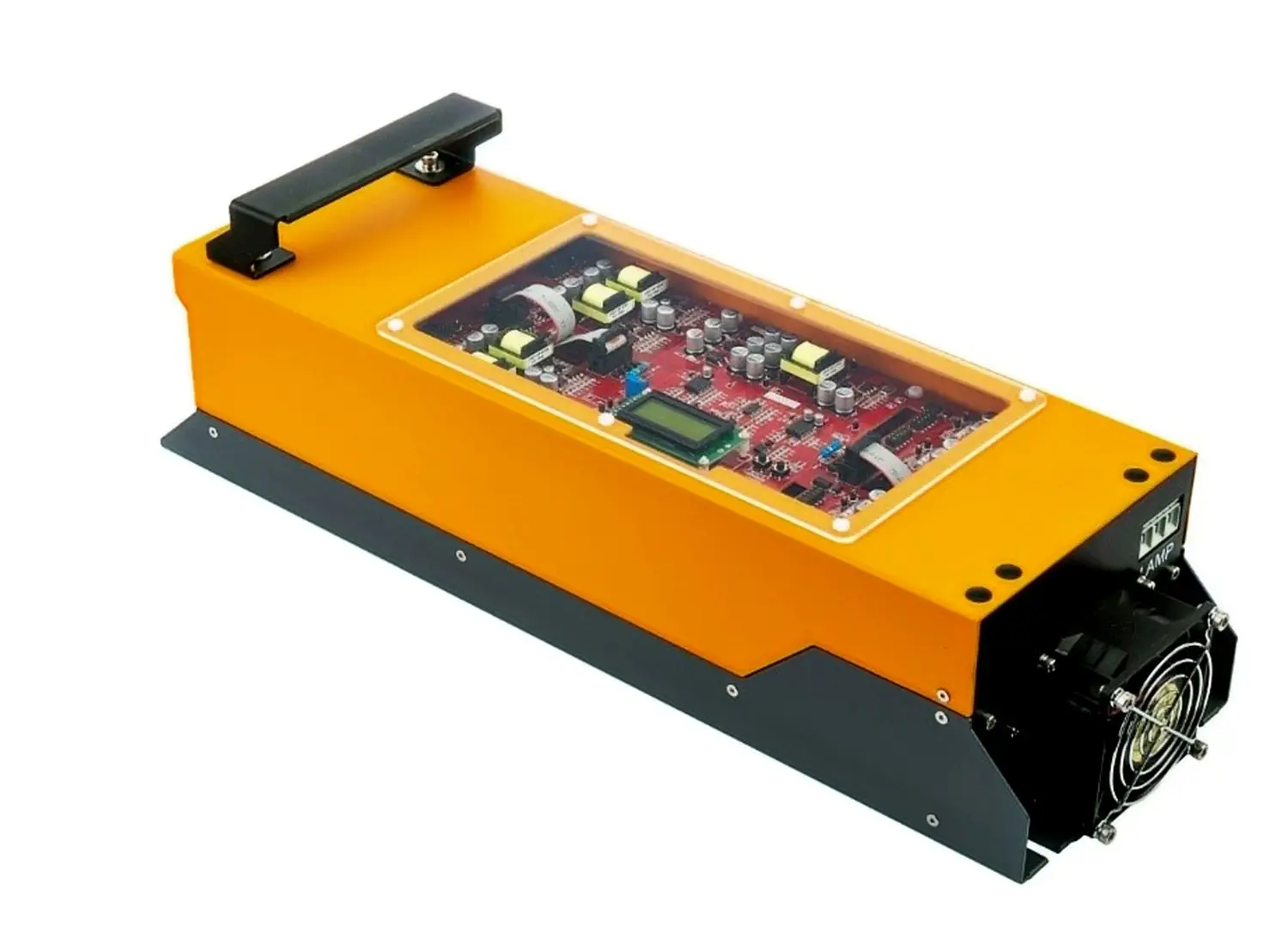
Hands-on industrial craftsmanship, today and tomorrow.
We aim to develop our technology, quality, automation and partnerships while maintaining a small, highly skilled team and the same personal respect for every customer.